
Table of Contents
Compare the Verified Tools
Use the exact listing, the manufacturer instructions, and your vehicle’s recovery plan to confirm fit before purchase or use.
| Product | Key listing detail | Review |
|---|---|---|
| Hi-Lift HL-484 | 48-inch cast/steel jack | See pick |
| Hi-Lift HL-425 | 42-inch all-cast jack | See pick |
| Hi-Lift ORK | Accessory kit with gear bag | See pick |
| Gerber Gorge | Folding shovel with carrying case | See pick |
| SOG PowerAssist | 16-tool multi-tool with sheath | See pick |
| Fiskars X27 | 36-inch splitting axe | See pick |
There is no universal overlanding tool kit. The useful loadout is the one that matches your rig, routes, cargo space, training, and the jobs you can safely perform. A compact shovel is not a replacement for a rated recovery point; a Hi-Lift is not a substitute for a stable jacking plan; and a gear bag does not make incompatible recovery components safe together.
This guide is deliberately narrow. It compares six title-matched products from the Trail Built verified pool that cover a field-tool layer around recovery and camp repair. The recommendations describe what the active listings state rather than claiming a universal winner or a shared hands-on test. Before any recovery or lifting task, follow the product manual, inspect your equipment, establish a safe work area, and use methods appropriate to your vehicle and conditions.
Build the loadout around the job, not the label
Start by separating three jobs. First, an organized recovery accessory kit keeps compatible straps, hardware, gloves, and instructions together. Second, a lifting tool requires a vehicle-specific, stable, and trained use case. Third, compact field tools help with digging, light repair, and camp work but do not create a recovery system on their own.
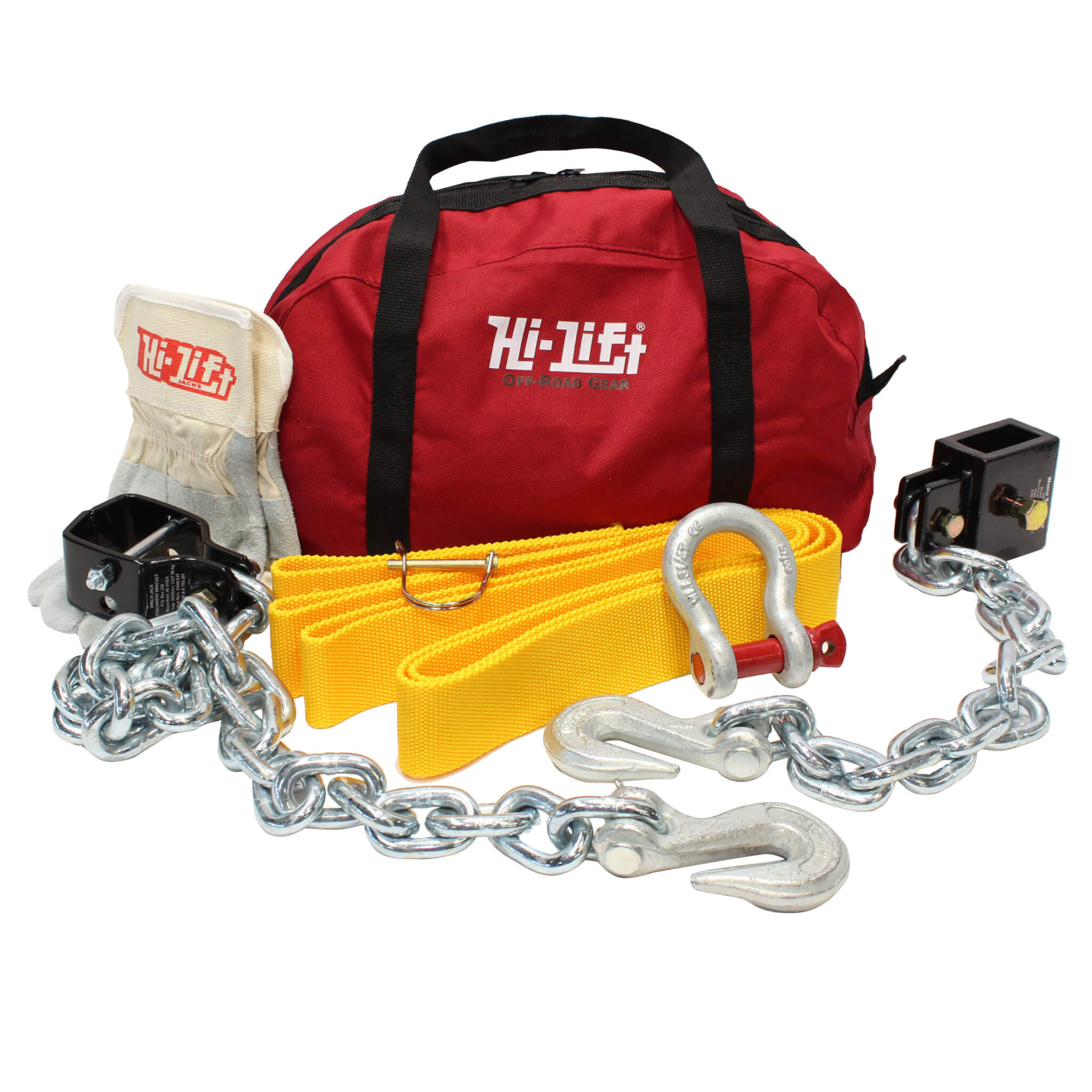
The Hi-Lift Jack Off-Road Kit ORK is the only product here whose listing explicitly includes a gear bag. Its listed contents include a winch tensioner, custom nose attachment, eight-foot tree saver strap, gloves, and hardware. It should be treated as an accessory kit for a compatible Hi-Lift setup, not as a claim that every recovery need belongs in one bag.
The six verified field tools
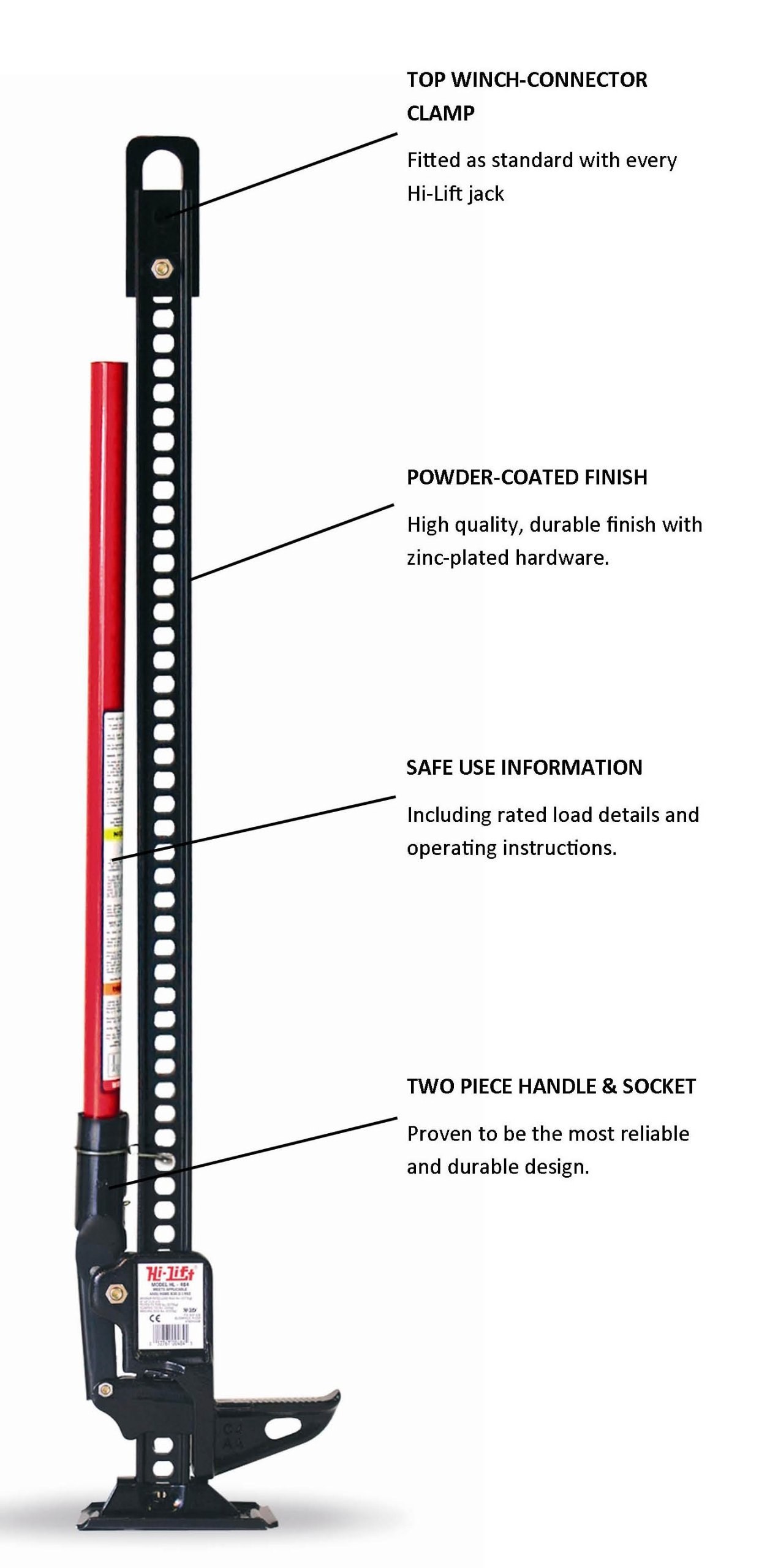
1. Hi-Lift Jack 48" Cast/Steel Jack HL-484 — longer-format lifting and pulling tool
Hi-Lift Jack 48" Cast/Steel Jack HL-484
The active listing identifies a 48-inch Hi-Lift jack with a cast-and-steel construction. Its product description positions the tool for lifting, pushing, pulling, winching, and clamping tasks.
What the listing supports
- A 48-inch cast/steel Hi-Lift jack format.
- Stated uses that include lifting, pulling, winching, and clamping.
- A tool that should be selected only with safe contact points, stable ground, and the manufacturer’s operating guidance.
2. Hi-Lift Jack 42" All-Cast Jack HL-425 — a shorter all-cast alternative

Hi-Lift Jack 42" All-Cast Jack HL-425
The active listing identifies a 42-inch all-cast Hi-Lift Jack. The shorter overall format creates a legitimate comparison point with the 48-inch HL-484, but does not remove the need to plan required lift height and storage.
What the listing supports
- A 42-inch all-cast jack product format.
- Listed minimum and maximum lifting-height information that should be confirmed for the planned vehicle use.
- A different size and construction description from the 48-inch cast/steel option.
3. Hi-Lift Jack Off-Road Kit ORK — the verified recovery accessory bag
Hi-Lift Jack Off-Road Kit ORK
The listing describes a Hi-Lift accessory kit stored in a convenient bag and lists a winch tensioner, custom nose attachment, eight-foot tree saver strap, gloves, and hardware.
What the listing supports
- A dedicated gear bag for the listed Hi-Lift accessories.
- Listed strap, glove, hardware, and winching components.
- An organized accessory layer that must still be matched to compatible recovery points, jack equipment, and a safe recovery plan.
4. Gerber Gorge Folding Shovel — a compact digging and clearing tool
Gerber Gorge Folding Shovel
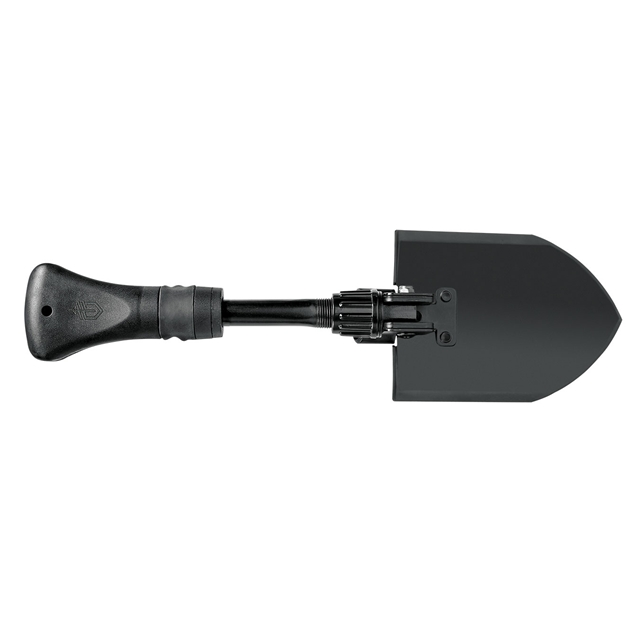
The active listing identifies a compact Gorge folding shovel with a powder-coated steel spade, glass-filled nylon shaft, and carrying case. It is a practical tool category for clearing or digging tasks, not a substitute for traction or recovery hardware.
What the listing supports
- A foldable shovel format with a carrying case.
- A powder-coated steel spade and glass-filled nylon shaft.
- Compact storage for the jobs a shovel can safely address on a route.
5. SOG PowerAssist Multi-Tool Pliers — compact repair support
SOG PowerAssist Multi-Tool Pliers
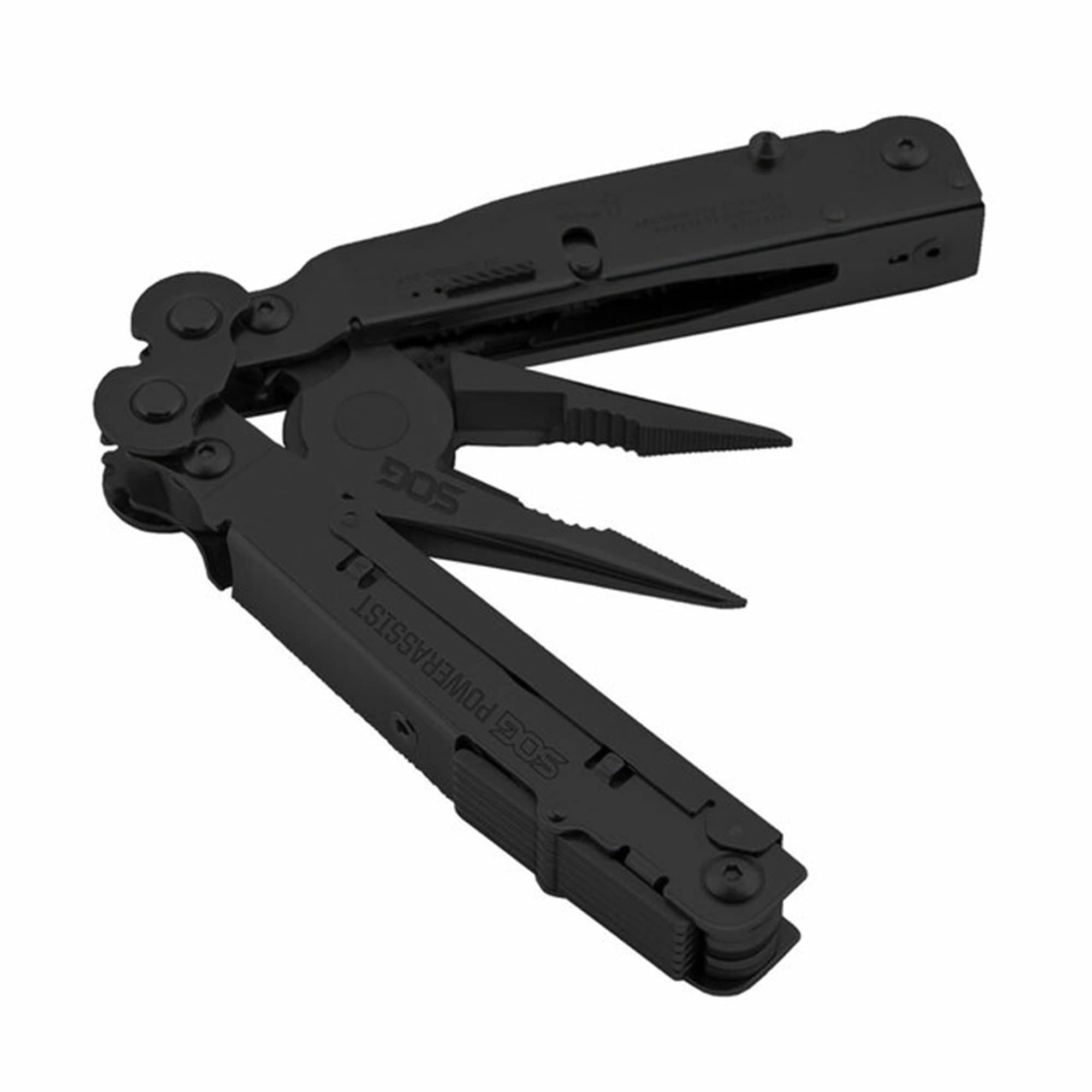
The active listing identifies a SOG PowerAssist multi-tool with 16 tools, a ballistic-nylon EDC sheath, and compound-leverage pliers. It fits the small-repair layer of a field kit rather than replacing dedicated tools.
What the listing supports
- A listed 16-tool format with a carrying sheath.
- Compound-leverage pliers and integrated hand-tool functions.
- A compact repair option to pack separately from recovery hardware.
6. Fiskars X27 Super Splitting Axe 36" — a large-log camp tool
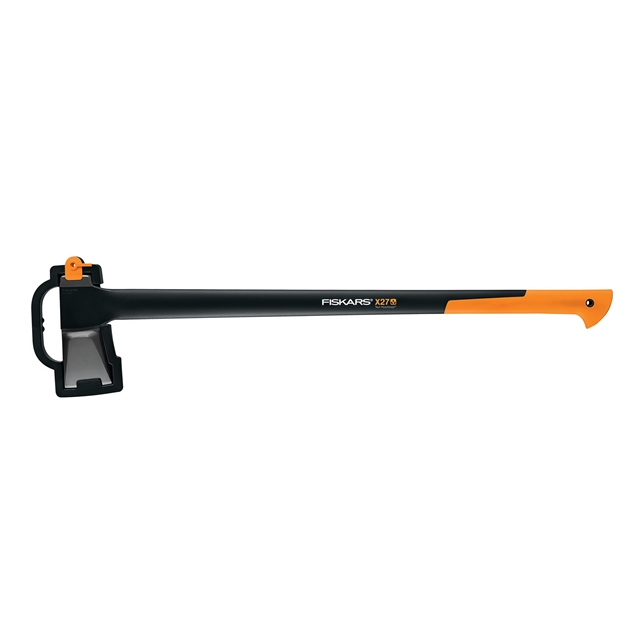
Fiskars X27 Super Splitting Axe 36"
The active listing identifies a 36-inch splitting axe for taller users and large logs, with a forged steel head, shock-absorbing handle, and sheath. It belongs in a camp-use plan only when its length and safety requirements suit the vehicle and storage.
What the listing supports
- A 36-inch splitting axe listed for large logs.
- A forged steel head, shock-absorbing handle, and protective sheath.
- A dedicated camp-work tool rather than a recovery component.
42-inch vs. 48-inch Hi-Lift jacks: what is actually different?
The two Hi-Lift listings are similar in role but not interchangeable by name alone. The HL-484 is listed as a 48-inch cast/steel jack, while the HL-425 is listed as a 42-inch all-cast jack. The useful comparison is not a generic winner: it is whether the required lift height, storage plan, intended contact points, ground conditions, and manufacturer guidance support one specific tool.
The ORK makes the organization portion clearer. Its included gear bag and listed accessories give related Hi-Lift components a place to live together. That does not prove that any item added to the bag is compatible or safe. Keep recovery components labeled, inspect them routinely, and avoid storing a tool kit so tightly that access or inspection becomes difficult on the trail.
Packing and safety checklist before departure
- Map the tool to the task: Pack a shovel for digging, a multi-tool for small repairs, and an axe only when camp-work needs justify its size and risk.
- Confirm vehicle-specific recovery fundamentals: Rated attachment points, compatible hardware, stable ground, and an agreed communication plan matter before a recovery begins.
- Separate clean and dirty gear: Use the kit bag to organize listed recovery accessories; keep sharp or dirty tools secured so they cannot damage straps, gloves, or cabin cargo.
- Check the space claim: A 42-inch and 48-inch jack create different mounting and storage constraints. Confirm clearance before buying.
- Inspect and train: Read the current instructions, inspect tools before every trip, and do not use equipment beyond its stated purpose or capacity.
Tool-kit and recovery-bag FAQ
Should every overlander carry a Hi-Lift jack?
No. A Hi-Lift requires an appropriate vehicle, safe lift points, stable ground, compatible accessories, and knowledge of its operating instructions. Select it only when those conditions are met and another recovery method is not more suitable.
Does a folding shovel replace traction boards or a recovery rope?
No. A shovel can help remove material around a tire or clear a path, but it does not provide traction or rated pulling capability. Build a recovery plan around the conditions and equipment your vehicle can safely use.
How should I pack a recovery-bag loadout?
Keep the bag’s listed components together, secure sharp tools separately, keep instructions accessible, and inspect webbing, hardware, and closures before travel. A bag is organization—not confirmation that components are compatible or safe for a given recovery.