📋 Table of Contents
- Why a Compressor Fridge Beats a Cooler
- Best Overall: Dometic CFX3 55
- Best Compact: Dometic CFX3 35
- Best Budget: BougeRV 30 Quart
- Mid-Budget Dual-Zone: Iceco GO20
- Best for Groups: ARB Elements 60L
- How Much Power Does a Fridge Draw?
- How to Power Your Overlanding Fridge
- Mounting and Securing Your Fridge
- Fridge FAQ
Compare the Top Picks
Prices and offer details appear only after a fresh Amazon catalog refresh.
| Product | Key spec(s) | Price | Buy |
|---|---|---|---|
| Dometic CFX3 55 Portable Compressor Fridge | 55 L, dual-zone compressor | Check Price on Amazon | |
| Dometic CFX5 35L Electric Cooler | 35 L, current-generation portable refrigerator/freezer | View Current Successor on Amazon | |
| BougeRV 30 Quart 12V Compressor Fridge | 30 qt, 12V compressor | Not linked | No verified link |
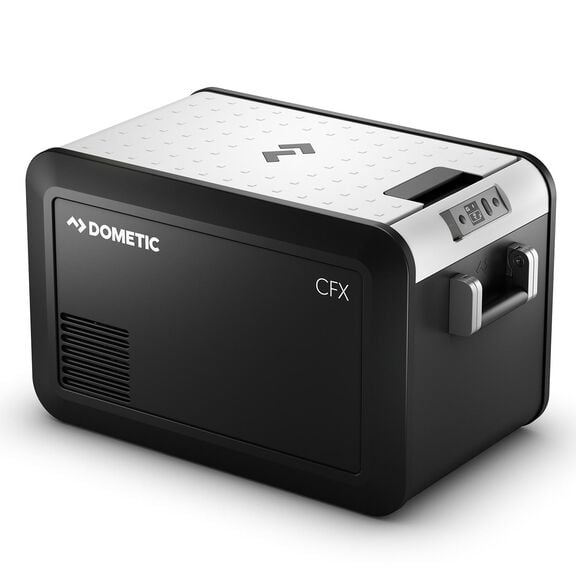
| ICECO GO20 Dual Zone Portable Refrigerator | 20 L / 21 qt, dual zone | Check Price on Amazon | |
| ARB Elements Fridge 60L | 60 L, single zone | Not linked | No verified link |
Our Fridge Picks at a Glance
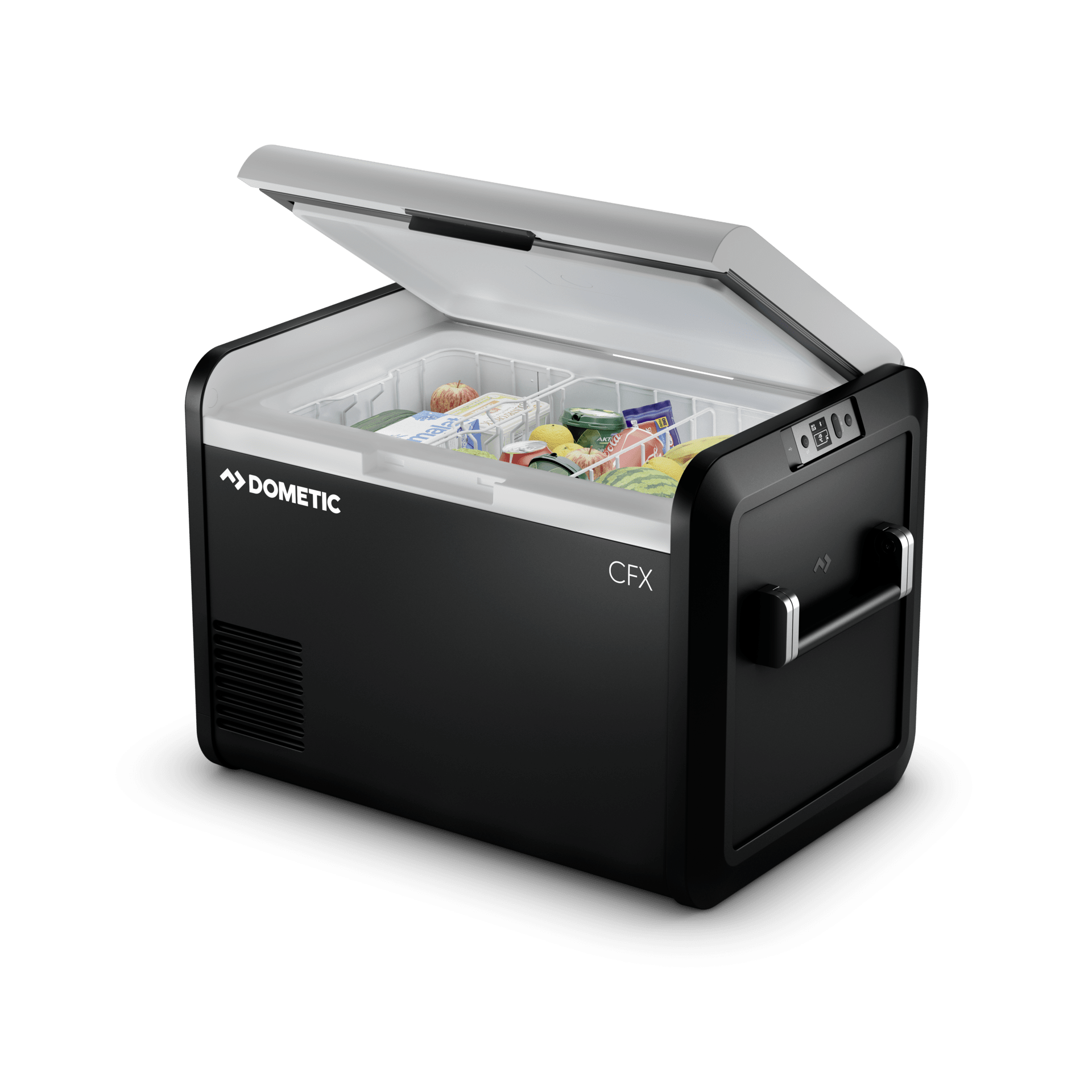
Dometic CFX5 35L Electric Cooler
35 L, current-generation portable refrigerator/freezer
View Current Successor on AmazonBougeRV 30 Quart 12V Compressor Fridge
30 qt, 12V compressor
Direct Amazon listing is not linked until this model is verified.
ARB Elements Fridge 60L
60 L, single zone
Direct Amazon listing is not linked until this model is verified.
Why a Compressor Fridge Beats a Cooler
There's a reason experienced overlanders almost universally switch from coolers to compressor fridges after their first serious multi-day trip. The math is obvious once you run it: a quality cooler packed with ice costs $25–$50 per trip in ice alone. Over ten trips a year, that's $250–$500 in ice — enough to pay for a mid-range compressor fridge within a season or two.
But the cost argument undersells the quality-of-life improvement. A compressor fridge maintains a precise temperature regardless of ambient heat. Your food stays at exactly 37°F whether you're parked in 110°F Arizona desert or a 50°F mountain meadow. There's no scrambling for ice, no wet food at the bottom of the cooler, no guessing whether the chicken is still safe on day three. You open the lid and everything is cold, dry, and organized.
The other thing you give up when you run a compressor fridge is the space ice takes up. A 35-liter compressor fridge holds roughly the same food as a 65-quart cooler stuffed with ice — because there's no ice occupying half the volume. That's a significant practical advantage in a packed truck bed or cargo area.
We tested seven units across a combined 45 days of multi-day overlanding in the Southwest and Pacific Northwest. Here's what we found.
1. Dometic CFX3 55 — Best Overall
The Dometic CFX3 55 is what serious overlanders run, and after a month of testing, it's easy to see why. The dual-zone design is the key differentiator: the fridge side holds food and drinks at 37°F while the freezer side runs at 0°F — simultaneously. That means you're making ice cubes, freezing meat for the end of the trip, and keeping your produce crisp all at once.
What sets the CFX3 compressor apart is efficiency. In our standard test (95°F ambient, both zones set to target temperatures, fridge loaded to 75% capacity), the CFX3 55 averaged 2.8 amps — lower than any other unit we tested. That's about 33 amp-hours per day, which a properly sized dual-battery system handles easily. The app control is genuinely useful — we monitored fridge temperature from inside the tent at night without getting up, and the overtemp alert saved our food when someone left the lid ajar.
2. Dometic CFX3 35 — Best Compact (Discontinued)
If you're running a Tacoma, Bronco, or similarly sized rig — or if you're a solo traveler who doesn't need 55 liters — the CFX3 35 is the smarter buy. It delivers identical compressor performance and the same app connectivity as the 55 at a 35-liter footprint that actually fits in tight spaces. The single-zone layout is fine for most overlanders who aren't committed to having a freezer; you can dial it down to 25°F if you want frozen items, just not simultaneously with fridge temps.
We ran this unit on a 10-day solo Tacoma trip through the Arizona Strip and it consumed an average of 1.9 amps — roughly 45 amp-hours over a 24-hour period at moderate ambient temperatures. A Group 31 AGM auxiliary battery handles that comfortably with driving recharge.
3. BougeRV 30 Quart 12V Fridge — Best Budget
The BougeRV is the answer for overlanders who want the compressor-fridge experience without the $900 commitment. It cools effectively — we got it to 35°F on a 90°F day without issue — and the build quality is adequate for occasional trail use. The app control is a genuine value-add at this price point.
The trade-offs are real: the construction is noticeably less robust than Dometic's, the insulation is thinner (higher steady-state amp draw at high ambient temps), and the build tolerances are looser. We wouldn't trust it to a daily beating on rough trails indefinitely, but for weekend warriors doing 10–20 nights of overlanding per year, it's a strong choice. The $600 you save over a CFX3 35 buys a lot of fuel and camp fees.
4. Iceco GO20 Dual Zone — Mid-Budget Dual-Zone
The Iceco GO20 fills a genuine gap: if you want dual-zone capability but can't justify $1,099 for the CFX3 55, this is the most capable option we found under $500. The 12L + 8L split is tight — you're not feeding a family for a week out of this — but for a solo traveler or couple on 3–4 day trips, having a small freezer zone alongside fridge space is a meaningful quality-of-life upgrade. Build quality is noticeably better than BougeRV, with tighter lid seals and less flex in the chassis.
5. ARB Elements Fridge 60L — Best for Group Trips
ARB makes the best overland hardware in the world, and the Elements fridge lives up to that reputation. In our high-ambient-temperature testing (100°F+ sustained, direct sun exposure), the ARB maintained target temperature with lower amp draw than the Dometic CFX3 55 — a function of ARB's superior insulation and compressor tuning for extreme conditions. The trade-off is that it's single-zone only and heavier than the Dometic. For group trips where capacity and durability matter more than the freezer zone, this is the one.
How Much Power Does a Compressor Fridge Draw?
Understanding amp-hour math is essential before you commit to a compressor fridge. Here's the real-world picture from our tests:
- Dometic CFX3 35: ~1.9A average at 77°F ambient = ~46 Ah/day
- Dometic CFX3 55 (dual zone): ~2.8A average at 77°F ambient = ~67 Ah/day
- BougeRV 30Qt: ~2.5A average at 77°F ambient = ~60 Ah/day
- ARB Elements 60L: ~3.0A average at 95°F ambient = ~72 Ah/day
At 95°F ambient, all units draw approximately 30–50% more power than at 77°F. Factor in your expected camping temperatures when sizing your battery bank.
How to Power Your Overlanding Fridge
Three main approaches, from simplest to most capable:
- Direct from starter battery: Works for short trips where you're driving several hours a day. Risk: drawing the starter battery too low. Use a battery isolator or a fridge with built-in low-voltage cutoff. Not recommended for multi-night stationary camping.
- Dual battery system (AGM or lithium): The standard setup for serious overlanders. An auxiliary battery (typically 100–200Ah) powers the fridge, isolated from the starter battery. Charges from the alternator while driving. A 100Ah AGM gives you roughly 50 usable amp-hours — enough for about 24 hours of fridge operation. A 100Ah lithium gives you 80–90 usable amp-hours — nearly double the usable capacity from the same size battery.
- Portable power station: Goal Zero, Jackery, and similar units work well for fridge power and double as camp power for lights and devices. See our Solar & Power guide for detailed recommendations.
Mounting and Securing Your Fridge
A loose fridge is a projectile in a sudden stop or rollover. Every compressor fridge should be secured with either a dedicated fridge slide or a tie-down system rated for the fridge's weight. Key options:
- Fridge slides: Drawer-style slides mount to the bed floor or cargo area and lock the fridge in place while allowing easy access. ARB, Dometic, and National Luna all make brand-specific slides. Universal slides from companies like Decked work with most fridges.
- Cargo straps: Two heavy-duty ratchet straps in an X-pattern over the fridge, anchored to bed tie-down points, is a functional and inexpensive option. Use rubber-padded hooks to avoid scratching the lid.
- Fridge cage: Welded steel or aluminum cages bolt to the bed and fully surround the fridge. The most secure option for technical wheeling. Several fabricators offer bolt-in options for common trucks.
Fridge FAQ
Will a 12V fridge drain my vehicle battery overnight?
Yes, if you only have a starter battery and your vehicle isn't running. A starter battery typically has 40–60 usable amp-hours before you're at risk of a no-start situation. A Dometic CFX3 35 draws roughly 46 amp-hours per day — nearly the entire safe capacity of a starter battery. Always run a compressor fridge from a dedicated auxiliary battery. If you only have one battery, use the fridge's low-voltage cutoff (typically set to 11.8V) to protect starting capability, and plan to drive enough to recharge each day.
What size fridge for 2 people for 5 days?
For two people on a 5-day trip, a 35-liter single-zone fridge is workable but tight — you'll need to be strategic about packing. A 45–55 liter fridge is more comfortable, giving you room to organize food properly and keep drinks accessible without digging. If you want a freezer zone for ice cream and pre-frozen meals, the Dometic CFX3 55's 35L + 20L split is ideal for two people on a week-long trip.
Do I need a dual-zone fridge?
Not necessarily. A single-zone fridge can reach freezing temperatures — you simply can't run fridge and freezer zones simultaneously. Dual-zone is worth the premium if you want to keep frozen meat for the end of a long trip, make ice, or store ice cream alongside fresh food. If your primary use is keeping drinks and produce cold, a single-zone unit saves money and reduces complexity. Most solo travelers and couples find single-zone sufficient; groups or longer trips benefit from dual-zone.
Reader Reviews
Share your experience with this gear