📋 Table of Contents
- Hard Shell vs. Soft Shell vs. Hybrid
- Quick Picks by Budget
- Use current listings, manufacturer documentation, and qualified installer estimates when planning this component.
- Use current listings, manufacturer documentation, and qualified installer estimates when planning this component.
- Use current listings, manufacturer documentation, and qualified installer estimates when planning this component.
- Roof Load & Rack Guide
- RTT FAQ
Prices, availability, installation cost, and configuration vary. Use current seller listings, manufacturer documentation, and qualified installer estimates when planning this component.
This guide summarizes expected features and trade‑offs at different RTT price tiers, highlights brands with strong reputations in reviews and owner reports, and identifies areas where marketing claims merit closer scrutiny.
Hard Shell vs. Soft Shell vs. Hybrid
Soft Shell RTTs
Consult the linked manufacturer or seller listing for current specifications, fitment, operating limits, and instructions before purchase or installation.
Prices, availability, installation cost, and configuration vary. Use current seller listings, manufacturer documentation, and qualified installer estimates when planning this component.
Hard Shell RTTs
Consult the linked manufacturer or seller listing for current specifications, fitment, operating limits, and instructions before purchase or installation.
Prices, availability, installation cost, and configuration vary. Use current seller listings, manufacturer documentation, and qualified installer estimates when planning this component.
Hybrid / Hardshell-Softshell
A hard shell base with a fabric pop-up body (like the iKamper Skycamp). Splits the difference — faster than soft shell, lighter than full hard shell, but complex seams are a long-term durability concern.
Quick Picks by Budget
- Use current listings, manufacturer documentation, and qualified installer estimates when planning this component.
- Featured Mid-Range Option: iKamper Skycamp Mini — quick setup and sturdy construction
- Use current listings, manufacturer documentation, and qualified installer estimates when planning this component.
- Confirm the current stated specification and fitment in the linked manufacturer or seller listing.
Research-based equipment planning
Research-based equipment planning
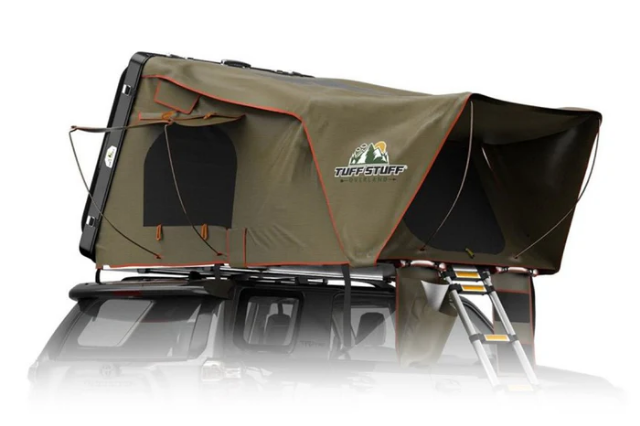
Tuff Stuff Alpha Series 55" Rooftop Tent
Highlights
- 280g ripstop canvas body — holds up to wind and rain better than cheap polyester
- 2.5" high-density foam mattress included
- Aluminum poles and ladder — no plastic junk
- Fits up to 2 adults comfortably
- 3-season rated
the Tuff Stuff Alpha punches above its weight. The ripstop canvas is a genuine differentiator at this price — most budget RTTs use 210D polyester that tears and leaks after a season of hard use. The aluminum ladder and poles add weight but mean the tent will last years of regular use.
Consult the linked manufacturer or seller listing for current stated specifications, fitment, operating limits, and instructions before purchase.
Research-based equipment planning
iKamper Skycamp Mini — Best Mid-Range
iKamper Skycamp Mini — hybrid design balances faster deployment and lower weight compared with full hard shells. The memory-foam mattress is frequently noted for comfort; ventilation placement and build quality are commonly cited strengths.
Research-based equipment planning
Sanhima Hotham Hard Shell Rooftop Tent — Best Premium Hard Shell
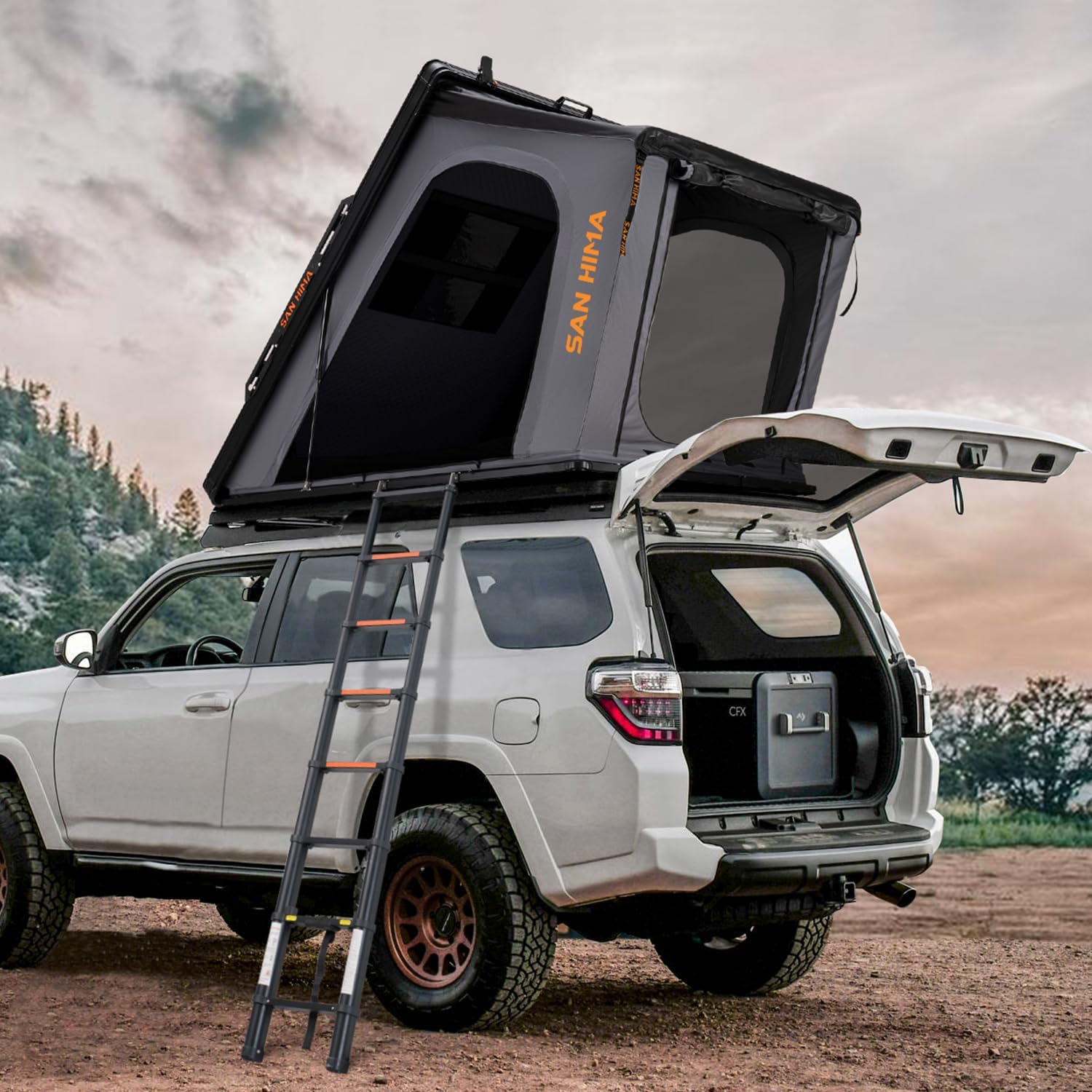
Sanhima Hotham Hard Shell Rooftop Tent
Highlights
- Rapid hard shell deployment in under a minute
- Durable aluminum shell engineered for 4-season protection
- High-density foam mattress providing superior comfort
- Integrated interior storage and LED lighting readiness
- Rugged aerodynamic profile reducing wind drag on the highway
Sanhima Hotham Hard Shell Rooftop Tent — aluminum hard shell designed for weather protection and improved aerodynamics; gas-strut assistance enables rapid deployment. High-density mattress and robust construction support multi-season use.
Roof Load & Rack Guide
Roof load and rack capacity are frequently overlooked. Static roof-load ratings (parked) differ from dynamic ratings (while driving). Check your vehicle and rack manufacturer's published ratings for your specific setup.
- Confirm the current specification, fitment, operating limits, and instructions in the linked manufacturer or seller listing.
- Confirm the current specification, fitment, operating limits, and instructions in the linked manufacturer or seller listing.
- Confirm the current specification, fitment, operating limits, and instructions in the linked manufacturer or seller listing.
Common aftermarket rack choices for Toyota 4Runner, Tacoma, and Tundra include Prinsu and Yakima Overhaul HD. For Ford Bronco and Jeep platforms, Tuffy Security and Gobi racks are widely used.
RTT FAQ
Can I leave my RTT on year-round?
Leaving an RTT mounted year-round is not ideal: UV exposure degrades fabric over time and added aerodynamic drag affects fuel economy. Hard shells are better suited to long-term mounting; remove soft shells during extended storage.
Do I need to season a canvas tent?
Yes — cotton and poly-cotton canvas RTTs need to be wetted out (soaked and dried) 2–3 times before first use to tighten the weave and prevent leaks at seams. Polyester tents don't require this.
What's the minimum rack crossbar spread needed?
Most RTTs require at least 44–48" of crossbar spread to mount securely. Check the manufacturer specs — undersized spread leads to stress fractures in the shell or base over time.