Table of Contents
Compare the Verified Tent Listings
Four rooftop tents and one ground tent. Confirm the current listing, size variant, fitment, and manufacturer instructions before purchase or travel.
| Product | Shelter type | Review |
|---|---|---|
| Sanhima Hotham Hard Shell Rooftop Tent | Slimline hard shell | See pick |
| Naturnest Sirius 1 Hardshell Rooftop Tent | Clamshell hard shell | See pick |
| Tuff Stuff Alpha Hard Top Side-Open Rooftop Tent | Hybrid side-opening hard top | See pick |
| Overland Vehicle Systems HD Nomadic 3 Extended Soft Shell Roof Top Tent | Soft shell with extended footprint | See pick |
| Big Agnes Copper Spur UL Backpacking Tent | Ground tent (freestanding) | See pick |
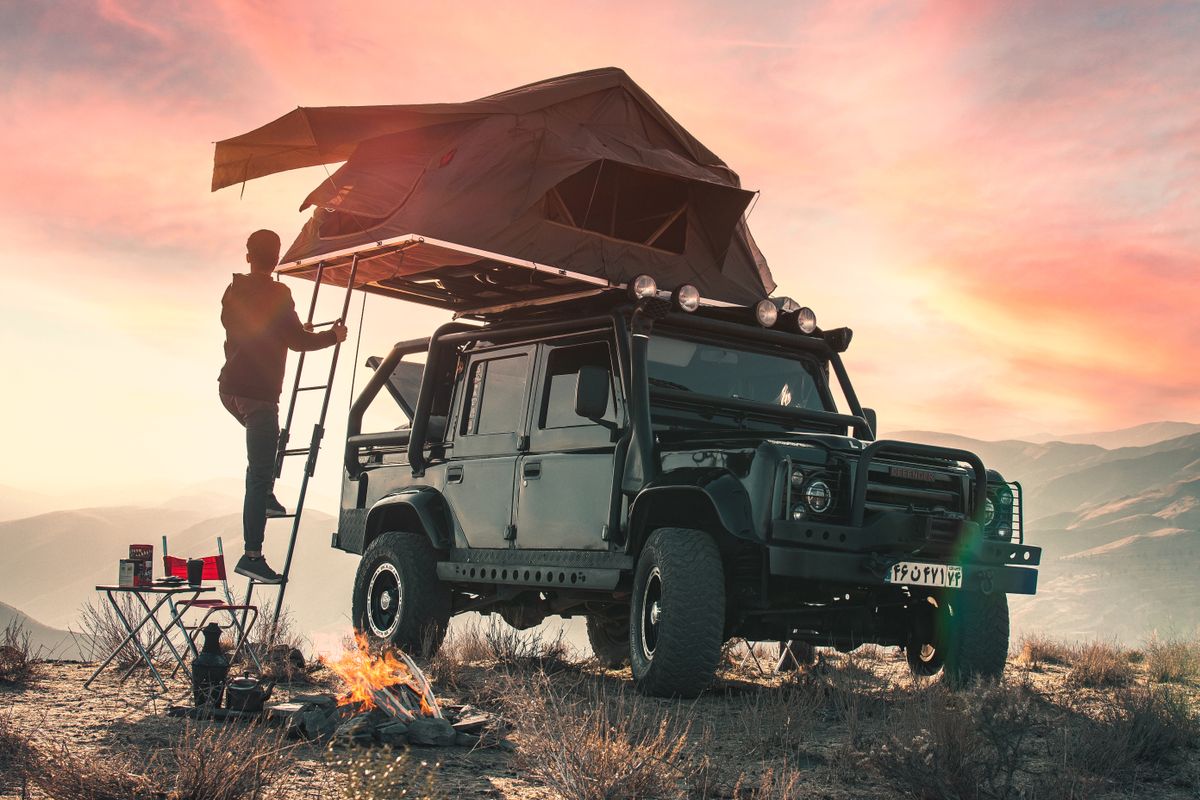
Ground tent or rooftop tent is usually the first shelter decision in an overland build, and it is often framed as a matter of taste. It is closer to arithmetic: how many nights you spend in one spot, how much weight the roof and rack can carry, how quickly you want camp up, and what you are willing to give up in vehicle height, wind noise, and cost.
This guide compares the two approaches directly, then maps five products from the Trail Built verified pool onto them: four rooftop tents and one ground tent. The pool holds a single ground-tent listing, a backpacking-class model, so the product set is not a balanced contest and is not a ranking. It illustrates each approach; the decision framework does the real work. Their public listings were title-checked and showed active buying controls on October 18, 2026 (the Big Agnes page is a size-variation listing, noted below). The descriptions summarize information contained in those listings and reflect research of listing data rather than evaluation through product operation. Confirm current specifications, fitment, and manufacturer instructions with the seller before purchase.
The short answer
- Choose a rooftop tent if you change camp most nights, want shelter ready in minutes, and your vehicle and rack can carry the listed weight with margin.
- Choose a ground tent if you stay several nights at a basecamp and drive off for day trips, have a low roof-load limit, want the lowest weight and cost, or need to clear low garages and branches.
- If you are unsure, a ground tent is the lower-commitment first step: nothing is bolted to the vehicle, and it can still be used later as a second shelter. For a deeper look at rooftop formats, see the rooftop tent buying guide.
Head-to-head: seven factors
1. Setup and teardown
Rooftop tents are built around speed: the hard-shell listings in this guide state setup claims of about 30 seconds, and the Tuff Stuff Alpha description claims under 2 minutes. A ground tent means laying out a footprint, assembling poles, and staking and guying the fly, which takes longer and gets slower in wind or rain, but needs no ladder and no level parking spot for the vehicle. The gap matters most on one-night stops and least on a week-long basecamp.
2. Roof load and vehicle impact
This is the factor that most often decides the question. The rooftop tent listings here state weights from 143 lb to 294 lb, all carried high on the vehicle and all added to the rack itself. The limit to check is the dynamic roof-load rating in the vehicle manual and the rack manufacturer rating, not the higher static figure that applies only while parked. A roof-mounted tent also raises the center of gravity, adds wind noise and drag, and affects clearance under garages and tree limbs. A ground tent adds none of this to the vehicle; it adds cargo volume and a little weight inside.
3. Camp flexibility
A ground tent can stay pitched while the vehicle leaves for a trailhead, a resupply, or a recovery, and it can be set up where the vehicle cannot park flat. A rooftop tent travels with the vehicle, so leaving camp usually means folding it first, and the parking spot needs to be reasonably level. That is a real cost on multi-day stays and a small one on moving trips.
4. Space and comfort
Rooftop tent listings usually include a mattress, ladder, and storage pockets: the Sanhima lists a 1.97-inch memory foam mattress and the Naturnest a 1.2-inch foam mattress with 47.2 inches of headroom. Bedding can often stay inside when the tent closes. A ground tent usually needs a separate sleeping pad, and floor area and headroom depend entirely on the size and model chosen; the Big Agnes listing here is sized for backpacking, so larger variants are worth a look for vehicle camping.
5. Weather and terrain
A rooftop tent keeps the sleeping area above mud, standing water, and uneven ground, and the listings state 4-season ratings and waterproof ratings of 5,000 mm for the Sanhima and Naturnest. Opening or closing a roof tent in strong wind can be awkward because the panels catch air. A ground tent can be staked low and guyed in exposed sites but depends on campsite selection and a footprint to stay dry. Both formats need ventilation to manage condensation, and neither should be treated as storm-proof without checking the manufacturer limits.
6. Cargo and storage
A rooftop tent frees interior cargo space but occupies the roof, which may also be wanted for recovery boards, fuel, or an awning. When it is off the vehicle between seasons, a tent in the 143 to 294 lb range needs a hoist or several people to lift safely. A ground tent packs into a stuff sack and takes interior volume instead; the Big Agnes 1 Person default lists only 2.4 lb.
7. Cost of ownership
A rooftop tent commits you to the tent, a rack that can carry it, and installation hardware, plus possible fuel and noise costs. A ground tent is a smaller purchase, but you will likely also buy a sleeping pad and perhaps a footprint, since the Big Agnes listing is tent only. Compare the total system, not just the tent, and check current Amazon offers on each listing for pricing.
The five verified building blocks
The three hard-shell and hybrid rooftop tents come first, then the soft-shell rooftop tent, followed by the ground-tent counterpart.
1. Sanhima Hotham Hard Shell Rooftop Tent — slimline hard shell for two
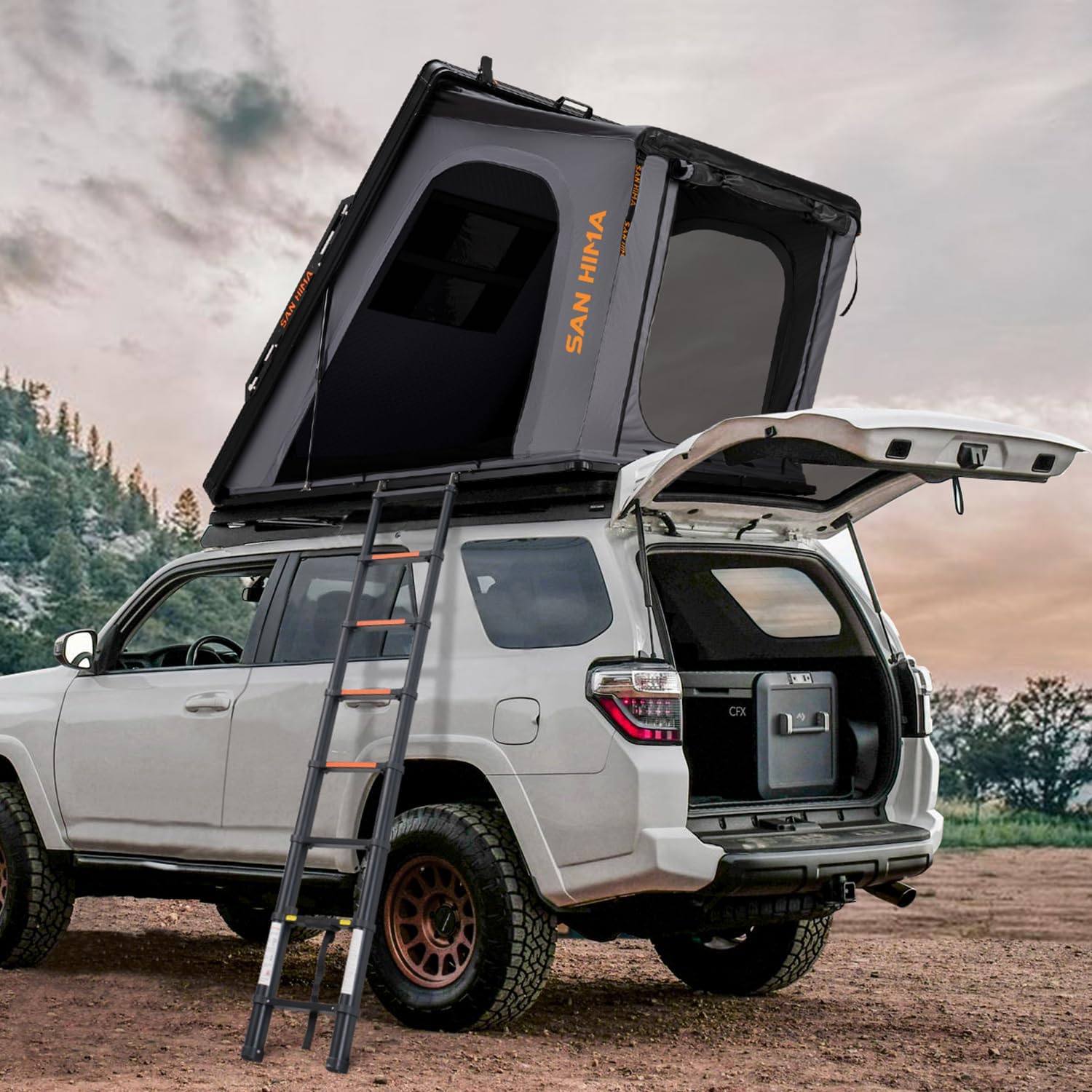
Sanhima Hotham Hard Shell Rooftop Tent
The active listing identifies a SanHima Hotham aluminum hard-shell rooftop tent for two people. The feature bullets give about 161 lb and a 5.43-inch packed height, while the details table lists 163.1 lb, so treat roughly 160 lb as the planning figure and match it to your roof and rack ratings.
What the listing supports
- A 2-person hard-shell tent with a stated 5,000 mm waterproof rating and a 4-season listing.
- A telescopic ladder, two crossbars, an LED strip light, a shoe bag, and a 1.97-inch memory foam mattress in the listing.
- A stated 30-second setup and a 2-year warranty, both worth confirming with the seller.
2. Naturnest Sirius 1 Hardshell Rooftop Tent — clamshell for two or three
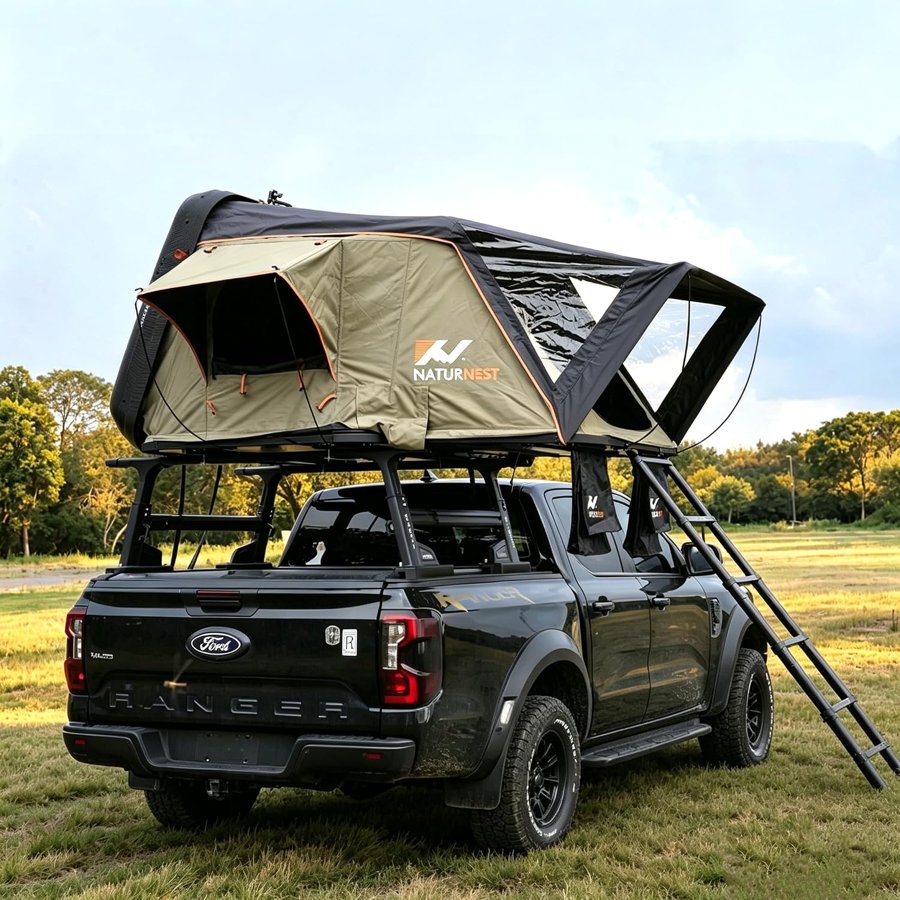
Naturnest Sirius 1 Hardshell Rooftop Tent
The active listing identifies a Naturnest Sirius 1 clamshell hard-shell rooftop tent for 2 to 3 people, with an ABS shell over an aluminum alloy frame, a hydraulic opening boom, and a built-in 7.5-foot ladder. At a listed 143 lb it is the lightest rooftop tent in this guide; the details table names a different brand (Bayati), so confirm seller, support, and warranty terms.
What the listing supports
- A stated 82.6 by 63 inch sleeping area with 47.2 inches of headroom and a 1.2-inch foam mattress.
- 420D ripstop nylon with a stated 5000 mm waterproof rating and UV 50+ protection.
- A double key-locking system, adjustable LED light, two shoe bags, and mesh windows in the listing.
3. Tuff Stuff Alpha Hard Top Side-Open Rooftop Tent — heavy-duty side opener
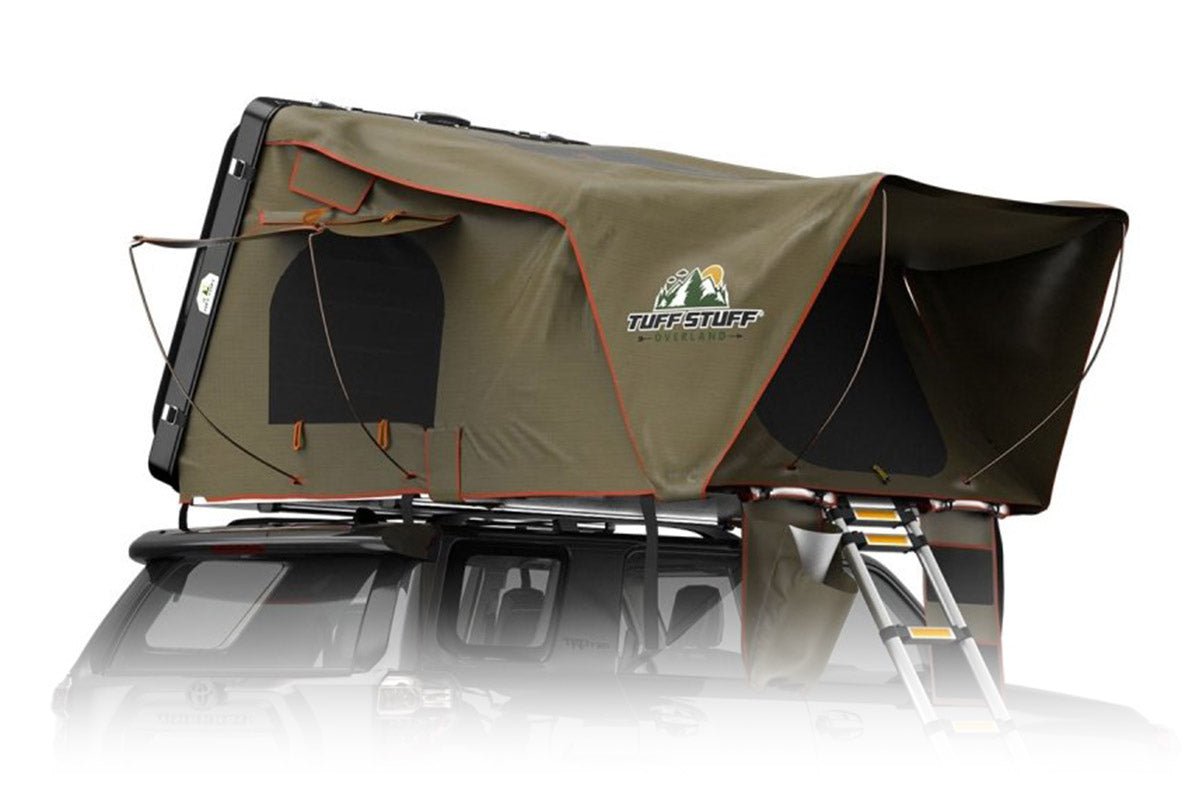
Tuff Stuff Alpha Hard Top Side-Open Rooftop Tent
The active listing identifies the Tuff Stuff Alpha, a hybrid side-opening hard-top rooftop tent that opens on the passenger side only. The details table lists 294 lb, the heaviest tent in this guide, and the title says 4 Person while the feature bullets give a 2 to 3 person sleeping capacity, so confirm real capacity before ordering.
What the listing supports
- A listed 294 lb weight and 75 by 87 by 52 inch dimensions, with mounting hardware for crossbars up to 3.25 inches.
- A telescoping ladder and interior and exterior LED lights; the listing notes a USB power pack is not included.
- A description claiming setup in under 2 minutes and a sloped shell meant to limit wind resistance while driving.
4. Overland Vehicle Systems HD Nomadic 3 Extended — soft shell with a bonus pack
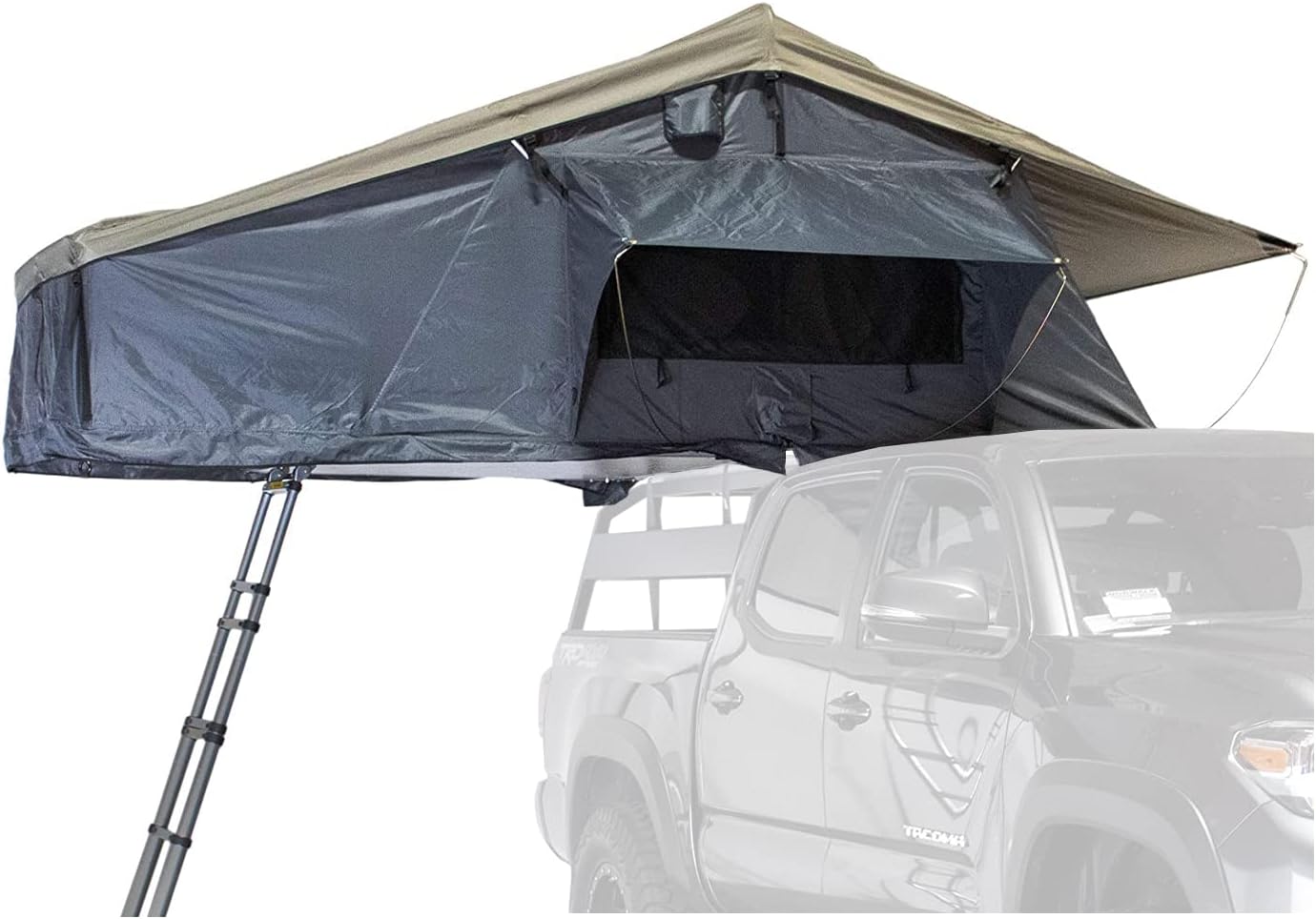
Overland Vehicle Systems HD Nomadic 3 Extended Soft Shell Roof Top Tent
The active listing identifies the Overland Vehicle Systems HD Nomadic 3 Extended, a soft-shell rooftop tent supplied with a ladder, rainfly, and travel cover. The details table lists 165 lb, a 63-inch floor width, and 3-person occupancy, and the listing asks buyers to confirm rack weight capacity first.
What the listing supports
- A soft-shell tent listing with ladder, rainfly, and travel cover, and a listed weight of 165 lb.
- Stated fitment on any factory or aftermarket roof rack, with no drilling or vehicle modification.
- A bonus pack of memory foam pillows and a mini broom and dustpan in the listing.
5. Big Agnes Copper Spur UL Backpacking Tent — the ground-tent counterpart

Big Agnes Copper Spur UL Backpacking Tent
The active listing is a Big Agnes Copper Spur UL family page that opens on the 1 Person configuration, with sizes listed from 1 to 5 person. The 1 Person default lists 2.4 lb, a 3-season rating, and a freestanding design; it is a backpacking-class tent that stands in here for ground camping, so pick your size on the page before ordering.
What the listing supports
- A freestanding, 3-season design with DAC poles and a vestibule for gear storage.
- Seven 6-inch stakes included, with a separate footprint listed as compatible but not included.
- Size options from 1 to 5 person on one listing, so the variant you buy decides weight, floor area, and headroom.
Which approach fits which trip
- Weekend trips with a new stop each night: a rooftop tent saves the most effort, provided the rack rating allows it.
- A week at one trailhead camp with day drives: a ground tent keeps the vehicle free and avoids packing a roof tent each morning.
- Smaller vehicles or factory racks with low limits: start with a ground tent; a 143 to 294 lb tent is a large share of many roof ratings.
- Cold, wet, or muddy conditions: a raised sleeping platform has appeal, but confirm the tent's weather limits and plan for ventilation either way.
- Shared camps with several sleepers: a ground tent scales by adding tents, while a rooftop tent is limited to its listed occupancy. Compare the listed occupancy, noting the Tuff Stuff Alpha listing gives conflicting figures.
Camp furniture follows the same logic: a ground-tent basecamp tends to want a table and chairs that pack small, covered in the camp chairs and tables guide. For the rest of the load, the complete packing list sets out a role-based loadout.
Before you buy: roof load and installation
- Find the real limit: read the dynamic roof-load rating in the vehicle manual and the rating on the rack, and use the lowest. Add the tent, ladder, crossbars, and anything else carried on the roof.
- Check crossbar fit: the Tuff Stuff Alpha listing mentions crossbars up to 3.25 inches, and the OVS listing asks buyers to confirm rack weight capacity. Confirm spacing, width, and hardware compatibility with the seller.
- Plan the lift: a tent of 143 to 294 lb needs a hoist or enough people to lift it without damaging the vehicle or injuring anyone.
- Re-check hardware: after the first drives, re-inspect mounting hardware and the ladder, and follow the manufacturer's torque and maintenance instructions.
- For a ground tent, choose the size variant first: read the size options, floor area, and headroom on the listing, and decide whether a footprint is worth adding.
Ground tent vs rooftop tent FAQ
Is a rooftop tent better than a ground tent for overlanding?
Neither is better in every case. A rooftop tent favors fast setup on trips that change camp most nights, provided the vehicle and rack can carry its weight. A ground tent favors multi-night basecamps, lower cost, and vehicles with tight roof-load limits. Match the choice to trip length, vehicle capacity, and budget rather than to a general ranking.
How much does a rooftop tent weigh, and can my vehicle carry it?
The four rooftop tent listings in this guide state weights from 143 lb to 294 lb, before crossbars, ladder extras, or anything else on the roof. The figure that matters while driving is the dynamic roof-load limit in the vehicle manual and the rack manufacturer rating. Add the tent, rack, and any other roof cargo together, and do not exceed the lowest rated limit.
Can I use a backpacking tent for vehicle-based camping?
Yes, a freestanding backpacking tent can serve as a ground tent at a vehicle camp, and weight and packed size matter less when the vehicle carries it. The trade-off is floor area and headroom: lightweight designs are sized for sleeping, not for living space. Choose the larger size variant for comfort and check whether a footprint is sold separately.
Which is faster to set up for one-night stops?
The rooftop tent listings here state setup claims of about 30 seconds for the Sanhima and Naturnest hard shells and under 2 minutes for the Tuff Stuff Alpha. Ground tent time depends on the design and on practice, and the Big Agnes listing does not state a setup time. For repeated one-night stops, the rooftop format usually saves the most effort.