Table of Contents
Compare the Verified Comms Listings
One CB radio, two GMRS mobile radios, and two satellite communicators. Confirm the current listing, included accessories, license rules, and subscription terms before purchase or travel.
| Product | Comms layer | Review |
|---|---|---|
| Uniden PRO520XL CB Radio | CB (27 MHz band) | See pick |
| Midland MXT275 MicroMobile GMRS Radio | GMRS (UHF), 15 W class | See pick |
| Midland MXT575 MicroMobile GMRS Radio | GMRS (UHF), 50 W class | See pick |
| Garmin inReach Mini 2 Satellite Communicator | Satellite messenger | See pick |
| Garmin GPSMAP 66i | Satellite messenger plus handheld GPS | See pick |
CB, GMRS, or satellite is usually framed as a gadget question, but it is really three separate jobs: talking to the vehicle behind you, reaching other people nearby, and reaching someone when there is no cell coverage and nobody in earshot. Each approach covers one or two of those jobs, and none of them covers all three.
This guide compares the three approaches directly, then maps five products from the Trail Built verified pool onto them: one CB radio, two GMRS mobile radios, and two Garmin satellite communicators. The product set illustrates each approach and is not a ranking. Their public listings were title-checked and showed active buying controls on October 19, 2026. The descriptions summarize information contained in those listings and reflect research of listing data rather than evaluation through product operation. Confirm current specifications, included accessories, and radio rules with the seller and the regulator before purchase.
The short answer
- Choose CB if you want a license-free radio, travel with mixed groups or other drivers, and are willing to set up a proper antenna.
- Choose GMRS if everyone in your group will carry a GMRS radio and you want higher power classes, compact antennas, and repeater access. A license is required.
- Add a satellite messenger if you travel beyond cell coverage. It is the only one of the three built around an SOS workflow, and it works whether or not anyone is in radio range.
- If you are unsure, most groups do best with one radio layer for the convoy and one satellite layer for emergencies. For handheld GMRS options and a broader roundup, see the vehicle communication gear guide.
Head-to-head: seven factors
1. Who you can reach
A CB radio reaches anyone else on the channel within range, which includes drivers who are not in your group. A GMRS radio reaches your group first, plus anyone on the same channel and privacy code, and the listings for both Midland radios cite 8 repeater channels, which can extend reach where a repeater exists. A satellite messenger reaches phones and email through its messaging plan, and the Garmin listings add an interactive SOS that routes to a 24/7 monitoring center. Radio only helps if someone is listening; satellite does not depend on that.
2. Range and terrain
Radio range is set by antenna type and placement, transmit power, and terrain far more than by the band name. Listing range figures are best-case numbers that hills, trees, and canyon walls cut sharply, so plan around line of sight. The Midland MXT575 is a 50 W class radio and the MXT275 a 15 W class radio, and the Uniden PRO520XL lists 4 watts, but a good antenna in a good position can matter more than the power rating. A satellite messenger needs a clear view of the sky rather than a path to another radio, so distance to your group is irrelevant, although dense canopy or a roof can slow a message.
3. Licensing and rules
CB does not need an individual license in the United States, although FCC equipment and operating rules still apply. GMRS requires an FCC license that covers the licensee and immediate family, so check the FCC site for the current application steps and fees before you transmit. Satellite messengers need an active subscription, and both Garmin listings note that some jurisdictions regulate or prohibit satellite communication devices, which matters if you cross borders.
4. Installation and antennas
The Uniden listing says a CB antenna is required and is not included. CB antennas are comparatively long because of the band, and they need solid mounting, a good ground, and matched cable to perform. The Midland GMRS units are compact micromobile radios built around a small body and a control microphone, and UHF antennas are much shorter, but the listings are thin about what ships in the box, so confirm the antenna, mount, and cable. A satellite messenger needs no installation, only a place on the dash or a pack strap with a view of the sky.
5. Power and battery
Mobile radios run from the vehicle's 12-volt system, so they are available whenever the vehicle is. Satellite handhelds carry their own rechargeable batteries. The inReach Mini 2 listing states up to 14 days in 10-minute tracking mode, while the GPSMAP 66i listing is internally inconsistent, citing up to 35 hours in 10-minute tracking mode and 200 hours in Expedition mode in its bullets but 16 hours in its details table. Confirm the figure before relying on it for a long trip.
6. Emergency use
Neither CB nor GMRS is an emergency system: both reach whoever happens to be listening. CB channel 9 is the designated emergency channel, and the Uniden listing highlights instant access to it, but nobody is obliged to monitor it. A satellite messenger is the only option here built around an SOS workflow, but it depends on an active plan, battery, and a clear sky, and the listings direct buyers to check local rules. Treat a radio as a coordination tool and a satellite device as the backup.
7. Cost of ownership
CB means the radio plus an antenna, mount, and cable. GMRS means the radio plus the license, and possibly antenna accessories. Satellite means the device plus a recurring plan, and the plan is the ongoing cost. Compare the total system rather than just the hardware, and check current Amazon offers on each listing for pricing.
The five verified building blocks
The CB radio comes first, then the two GMRS mobile radios, followed by the two satellite communicators.
1. Uniden PRO520XL CB Radio — license-free mobile CB

Uniden PRO520XL CB Radio
The active listing identifies the Uniden PRO520XL Pro Series 40-channel mobile CB radio. The bullets state 4 watts of transmit power, RF gain control, an automatic noise limiter, a public address switch, and instant access to emergency channel 9, and the details table lists 1.6 lb and compact 1.38 by 4.5 by 6.75 inch dimensions. The listing says a CB antenna is required and is not included.
What the listing supports
- A 40-channel, 12-volt mobile CB radio with a front-mounted 4-pin microphone on an extra-long coiled cord.
- RF gain, squelch, an automatic noise limiter, and an S/RF LED meter in the listed feature set.
- A public address function and an external speaker jack; the PA speaker and the antenna are both bought separately.
2. Midland MXT275 MicroMobile GMRS Radio — compact 15 W GMRS mobile
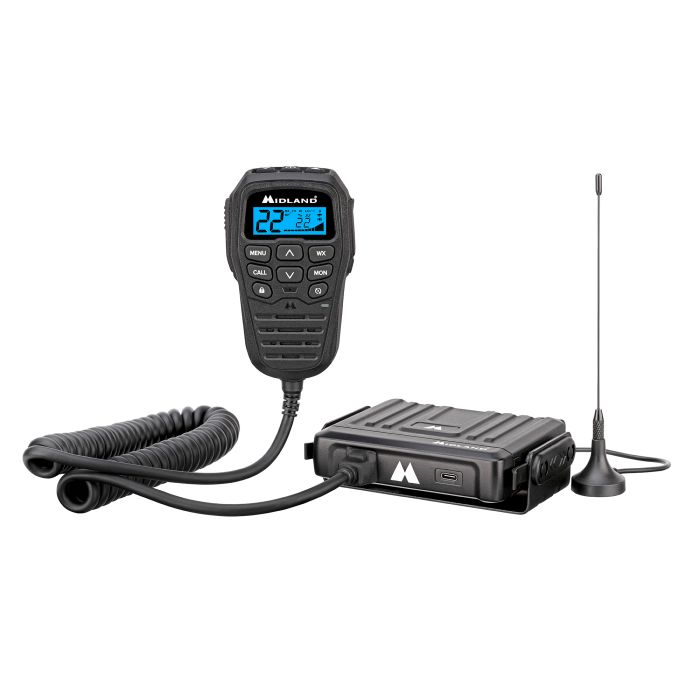
Midland MXT275 MicroMobile GMRS Radio
The active listing identifies the Midland MXT275, a 15 W MicroMobile GMRS two-way radio with an integrated control microphone. The listing title cites 15 high-power channels, 8 repeater channels, NOAA weather scan and alert, and 142 privacy codes, and the details table lists a 1 by 5 by 5.25 inch body and a 1-year warranty. The bullet copy is very short, so confirm the antenna, mount, and cable that come in the box before ordering.
What the listing supports
- A GMRS mobile with a stated 15 W output class, 8 repeater channels, and NOAA weather scan and alert in the listing title.
- A compact transceiver body that pairs with a hand-held control microphone, per the listing and its images.
- The details table lists it as not water resistant, so plan a dry in-cabin location for the body and microphone.
3. Midland MXT575 MicroMobile GMRS Radio — 50 W GMRS mobile
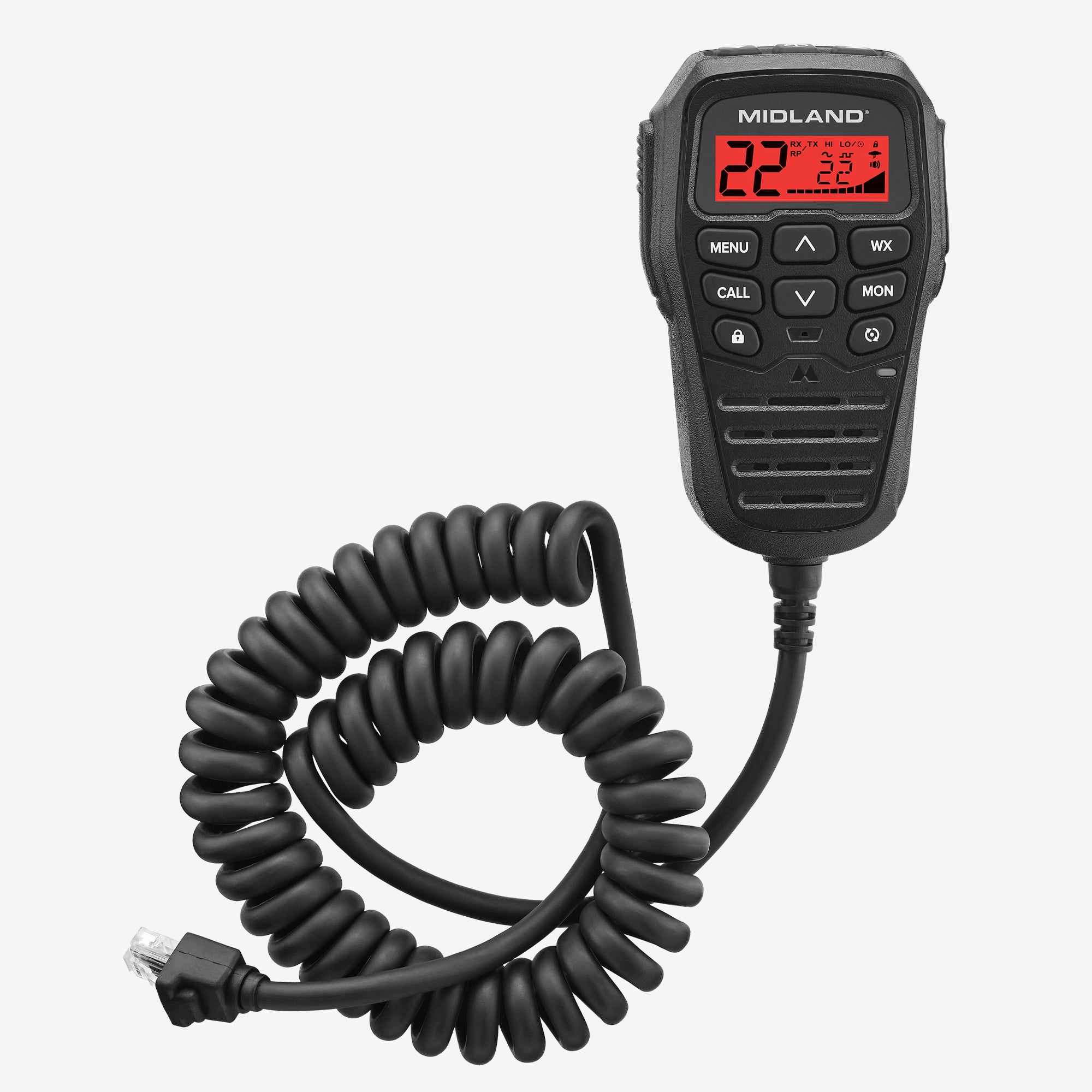
Midland MXT575 MicroMobile GMRS Radio
The active listing identifies the Midland MXT575, a 50 W MicroMobile GMRS two-way radio that carries the same headline feature list as the MXT275 in its title: 15 high-power channels, 8 repeater channels, NOAA weather scan and alert, and 142 privacy codes. The details table lists 3.8 lb, 1.5 by 7 by 5.5 inch dimensions, and a 1-year warranty. The bullet copy is a single line, so the title and details table carry most of what the listing states.
What the listing supports
- A stated 50 W output class, the step up from the 15 W class MXT275 for buyers who want more power behind a good antenna.
- A GMRS frequency range of 462.5500 to 467.7125 MHz in the details table, with an integrated backlit control microphone.
- The details table lists it as not water resistant; the photo shows the microphone and cable rather than the full unit.
4. Garmin inReach Mini 2 Satellite Communicator — pocket-size messenger and SOS
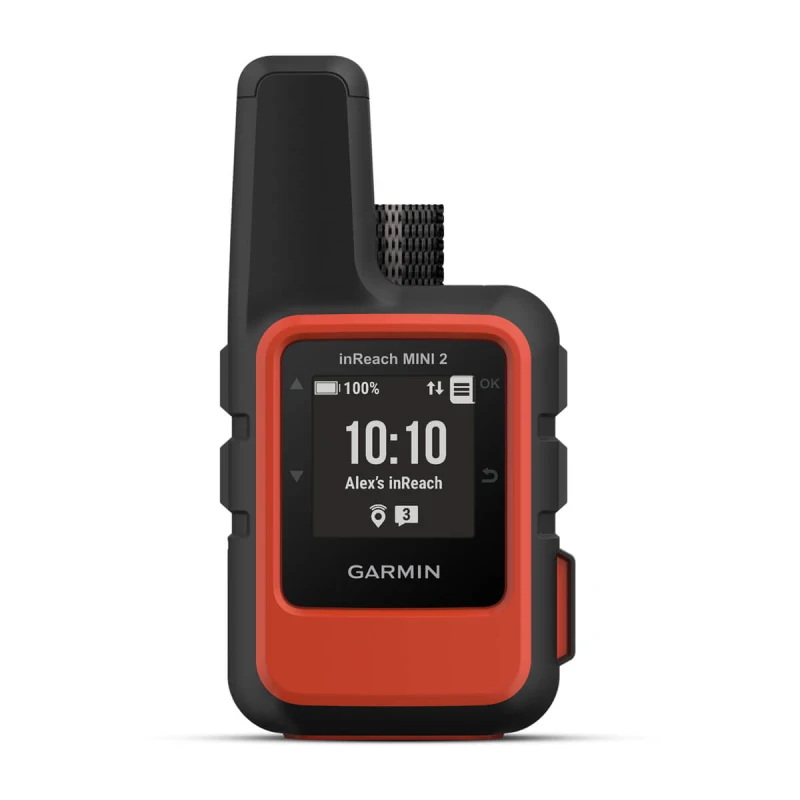
Garmin inReach Mini 2 Satellite Communicator
The active listing identifies the Garmin inReach Mini 2 in orange, a compact satellite communicator for two-way messaging and interactive SOS, with an active satellite subscription required. The bullets state up to 14 days of battery life in 10-minute tracking mode, and the details table lists 2.04 by 1.03 by 3.9 inch dimensions. The bullets also describe TracBack routing, a digital compass, and pairing with the Garmin Explore app.
What the listing supports
- Two-way messaging and interactive SOS through a satellite plan, with MapShare location sharing described in the bullets.
- A listed battery life of up to 14 days in 10-minute tracking mode, which runs from its own battery rather than the vehicle.
- The listing warns that some jurisdictions regulate or prohibit satellite communication devices, which matters for border crossings.
5. Garmin GPSMAP 66i — handheld GPS with satellite messaging
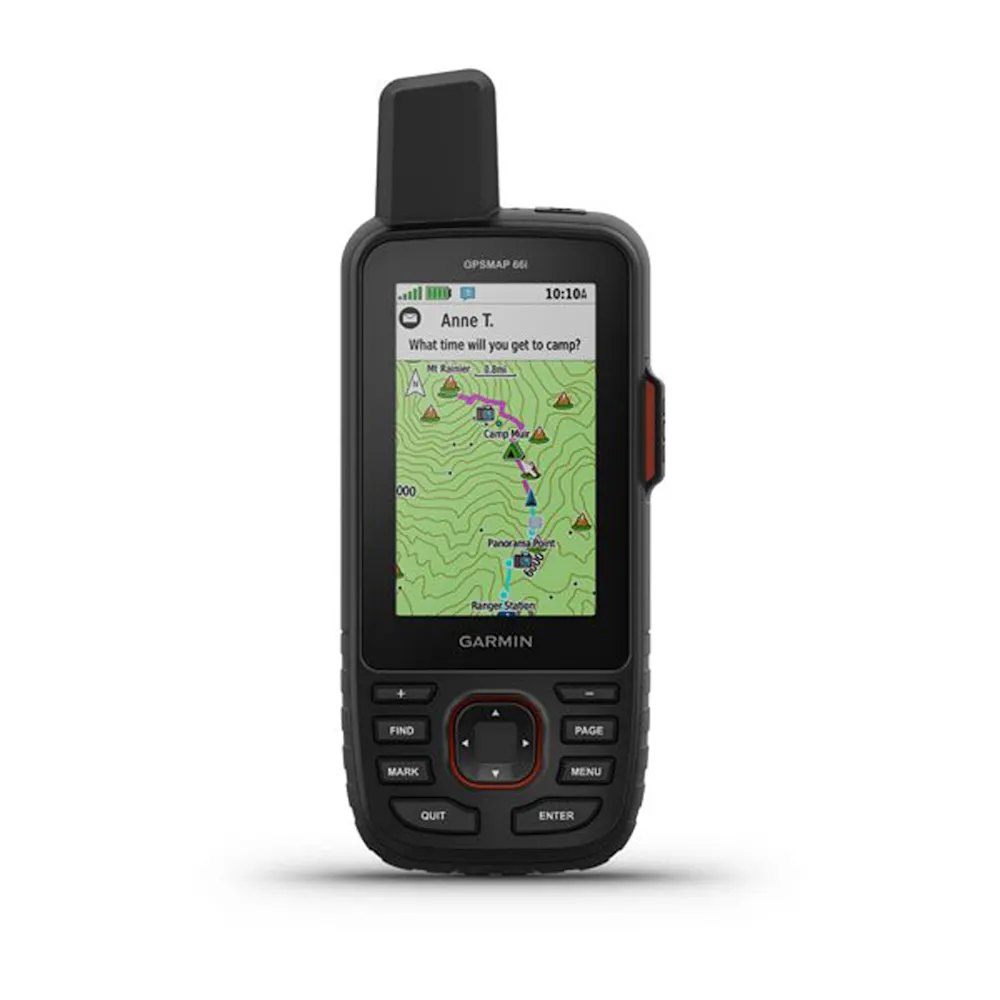
Garmin GPSMAP 66i
The active listing identifies the Garmin GPSMAP 66i, a button-operated handheld GPS and satellite communicator with a 3-inch sunlight-readable color display and preloaded Garmin TOPO mapping. The bullets describe interactive SOS and two-way messaging over the Iridium satellite network with a satellite subscription required, and the details table lists 2.5 by 1.4 by 6.4 inch dimensions. Battery figures conflict inside the listing: the bullets cite up to 35 hours in 10-minute tracking mode and 200 hours in Expedition mode, while the details table gives 16 hours.
What the listing supports
- A larger screen and preloaded topographic maps, so one device covers navigation and satellite messaging.
- Birdseye satellite imagery downloads that the listing says carry no annual subscription; the messaging plan is separate.
- Cellular connectivity for weather forecasts and geocaching, and Garmin Explore app syncing for waypoints and routes.
Which approach fits which trip
- A solo rig or a couple far from cell coverage: start with a satellite messenger, since there may be no one in radio range to hear a call.
- A convoy of two to six vehicles: put a radio in every vehicle. GMRS suits a group that will all license and carry compatible radios, and CB suits a mixed group that wants no license.
- Mixed traffic and highway approaches: a CB radio lets you hear and be heard by drivers who are not in your group.
- Trailhead areas with repeater coverage: a GMRS radio can use repeater channels where one is available; confirm local repeater access first.
- Extended remote trips: use both layers. A radio coordinates the convoy, and a satellite device handles check-ins and emergencies.
Satellite devices also overlap with navigation, which the GPS and navigation guide covers in more depth. A comms plan works best alongside a trauma-ready kit, outlined in the first aid kit guide.
Before you buy: license, antenna, and plan
- Decide the job first: convoy talk, contact with other drivers, or emergency contact beyond coverage. That choice usually settles the category.
- Sort out the license: GMRS requires an FCC license before you transmit. CB does not, but FCC rules still apply.
- Plan the antenna: the Uniden listing states the CB antenna is not included. For any mobile radio, choose a mounting spot, cable route, and grounding before ordering.
- Activate the satellite plan early: both Garmin listings say an active subscription is required. Send a message from the driveway to confirm the device and plan work before you leave coverage.
- Check the rules where you are going: the Garmin listings note that some jurisdictions regulate or prohibit satellite communication devices.
- Agree on a plan with your group: pick channels and privacy codes, set check-in times, and do a radio check before you leave pavement.
CB, GMRS, and satellite FAQ
Is CB or GMRS better for overlanding?
Neither is better in every case. CB needs no individual license and is widely used in trucks, which helps when your group has mixed equipment. GMRS adds higher power classes, compact UHF antennas, and repeater access, but it requires an FCC license and works best when everyone in the group has a GMRS radio. Match the choice to your group, your vehicles, and how much installation you want to do.
Do I need a license for CB or GMRS?
A CB radio does not need an individual license in the United States, although FCC equipment and operating rules still apply. GMRS does require an FCC license, which covers the licensee and immediate family. Check the FCC GMRS page for the current application steps and fees, and follow the rules of any other country you travel through.
Can a satellite messenger replace a vehicle radio?
Not for convoy talk. A radio gives instant voice contact with vehicles that are within range, while a satellite messenger sends text messages and SOS alerts through a satellite plan and needs a clear view of the sky. Most groups that travel beyond cell coverage use a radio for the convoy and a satellite device for emergencies and check-ins.
Do the Garmin devices need a subscription?
Yes. Both Garmin listings state that an active satellite subscription is required for messaging and SOS. Plan options and prices change, so review Garmin's current plans and activate one before you leave coverage.