📋 Table of Contents
- Why a Dedicated Power System Matters
- Best All-in-One: Goal Zero Yeti 1500X
- Best Mid-Budget Station: Jackery Explorer 1000 Pro
- Best Portable Solar: Renogy 200W Suitcase
- Best House Battery: Battle Born 100Ah LiFePO4
- Best DC-DC Charger: Renogy DCC50S
- Power Station vs. Dual Battery System
- How to Calculate Your Power Needs
- Solar Charging Math
- Lithium vs. AGM vs. Lead-Acid
- Power System FAQ
Why a Dedicated Power System Matters for Overlanding
Modern overlanding is power-hungry in ways that didn't used to matter. A decade ago, the gear list ran on propane and 12V cigarette lighter adapters. Today's serious rig runs a compressor fridge (3–5A continuous), a rooftop tent fan or heater (2–8A), LED camp lighting (0.5–2A), device charging (1–3A), and possibly a CPAP machine (5–10A). Add it up and you're looking at 15–25+ amps of sustained draw — far more than a starter battery can safely support, and far more than casual alternator charging can keep up with on short driving days.
A dedicated power system solves all of this. Whether you go with a portable power station, a permanent dual-battery setup, or a full lithium house-battery system, the goal is the same: a substantial, isolated power reserve that runs your camp electronics without risking your ability to start the engine, recharged by a combination of driving and solar.
The three main approaches each have distinct strengths. We'll cover them in detail, but here's the overview:
- Portable power station: No installation, works at camp and at home, easy to upgrade. Best for overlanders who don't want to modify their vehicle or who haven't committed to a single truck.
- Dual battery system (under-hood AGM or lithium): Always with you, charges while driving, higher continuous output for high-draw loads. Best for permanent rigs where you want integrated power.
- Full lithium house battery: Maximum capacity and efficiency, best for long expeditions. Higher upfront cost and installation complexity.
1. Goal Zero Yeti 1500X — Best All-in-One Power Station
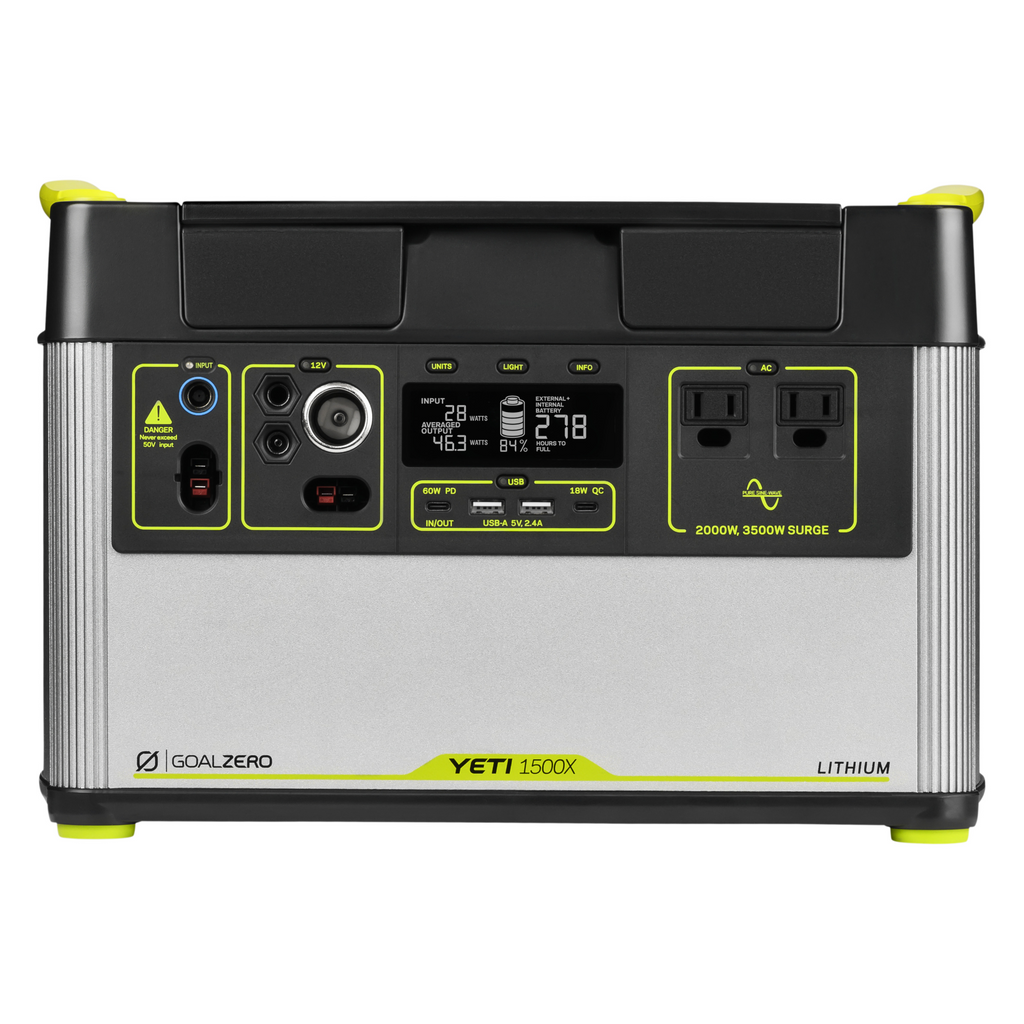
Goal Zero Yeti 1500X Portable Power Station
Why We Like It
- 1,516 Wh capacity — runs a Dometic CFX3 fridge for ~48 hours
- Pure sine 2,000W inverter handles any camp load safely
- Charges from wall (AC), 12V car port, or solar simultaneously
- App monitoring and control via WiFi/Bluetooth
- Expandable with optional Yeti Tank expansion batteries
- Works as home backup power when not in the field
The Yeti 1500X is the power station we've recommended to more overlanders than any other unit, and it's earned that position. The 1,516 Wh capacity is large enough to run a Dometic CFX3 35 for approximately 48 hours — giving you two full days of fridge power from a single charge, or one day of fridge plus all your devices and lights with significant headroom. In our field testing across a 7-day trip without shore power, we ran the Yeti alongside a 200W solar panel and maintained above 60% charge every morning.
The pure sine wave inverter is important: it means you can safely power sensitive electronics (CPAP machines, laptop chargers, camera batteries) without the voltage noise that modified sine inverters produce. The app connectivity is genuinely useful in the field — we monitored input/output wattage from inside the tent and scheduled the fridge compressor's eco mode through the app.
The home-use case is underrated. When you're not overlanding, the Yeti 1500X sits in your garage fully charged as a home backup power station. During a grid outage, it powers your refrigerator, phone charging, and lighting for 12–24 hours. That dual utility helps justify the $1,999 price tag.
2. Jackery Explorer 1000 Pro — Best Mid-Budget Power Station
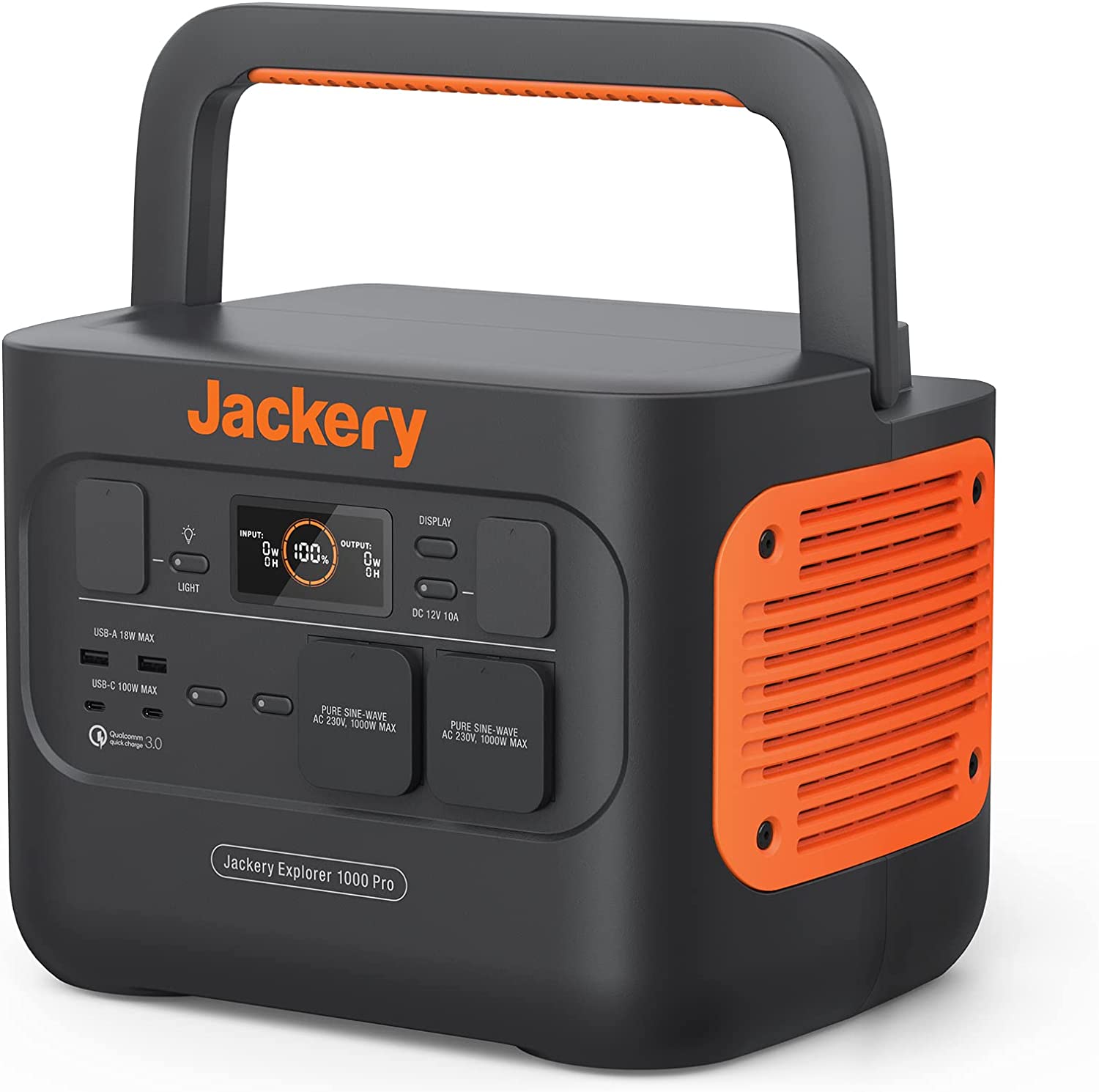
Jackery Explorer 1000 Pro Portable Power Station
Why We Like It
- 1,002 Wh capacity — strong value vs. the Yeti 1500X
- 1,000W pure sine inverter handles most camp loads
- 800W solar input — fastest solar recharge in class
- 1.8-hour wall charge time is exceptional for the capacity
- Lighter than the Yeti 1500X — easier to move in and out of the truck
- Quiet fan management under moderate load
At $999, the Jackery Explorer 1000 Pro delivers roughly 65% of the Yeti 1500X's capacity at 50% of the cost. For overlanders on shorter trips (3–4 nights), the 1,002 Wh is sufficient for fridge power plus devices without anxiety. The 800W solar input is the standout spec — it accepts more solar input simultaneously than any competing unit at this price, meaning you can recharge significantly faster with a good panel setup.
The main limitation is no expansion battery option. Unlike the Yeti ecosystem where you can add Yeti Tank batteries to extend capacity, the Jackery 1000 Pro is what it is. If you find yourself wanting more headroom on longer trips, you'd need to upgrade to a larger unit rather than expand. For defined shorter-trip use, it's an excellent value.
3. Renogy 200W Foldable Solar Suitcase — Best Portable Solar Panel
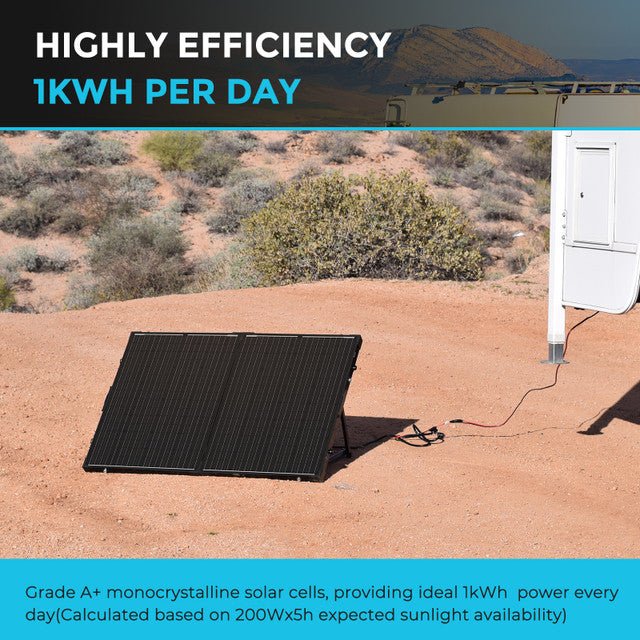
Renogy 200W Foldable Solar Suitcase
Why We Like It
- Folds to briefcase size for easy storage in truck bed or cargo area
- Built-in 20A PWM charge controller — works with any 12V system or power station
- 20V / 11A output — solid real-world production in direct sun
- Adjustable kickstand for optimal panel angle without a rack
- MC4 connectors compatible with virtually all solar systems
- Significantly lighter than rigid panels of equivalent wattage
The Renogy 200W suitcase is the right first solar panel for most overlanders. It doesn't require roof rack mounting, wiring through the cab, or any permanent installation — you open it, angle the kickstand toward the sun, and plug it in. Paired with a Jackery or Goal Zero power station, setup takes about 90 seconds.
In real-world testing (7–8 hours of good sun, panel optimally angled), we averaged 140–160W of actual production from the 200W panel — typical for monocrystalline panels in ideal conditions. That's 980–1,120 Wh of energy per day, which more than replaces what a compressor fridge consumes. On overcast days production dropped to 40–60W — still useful, just not a full daily replacement.
4. Battle Born 100Ah LiFePO4 — Best House Battery for Permanent Installs
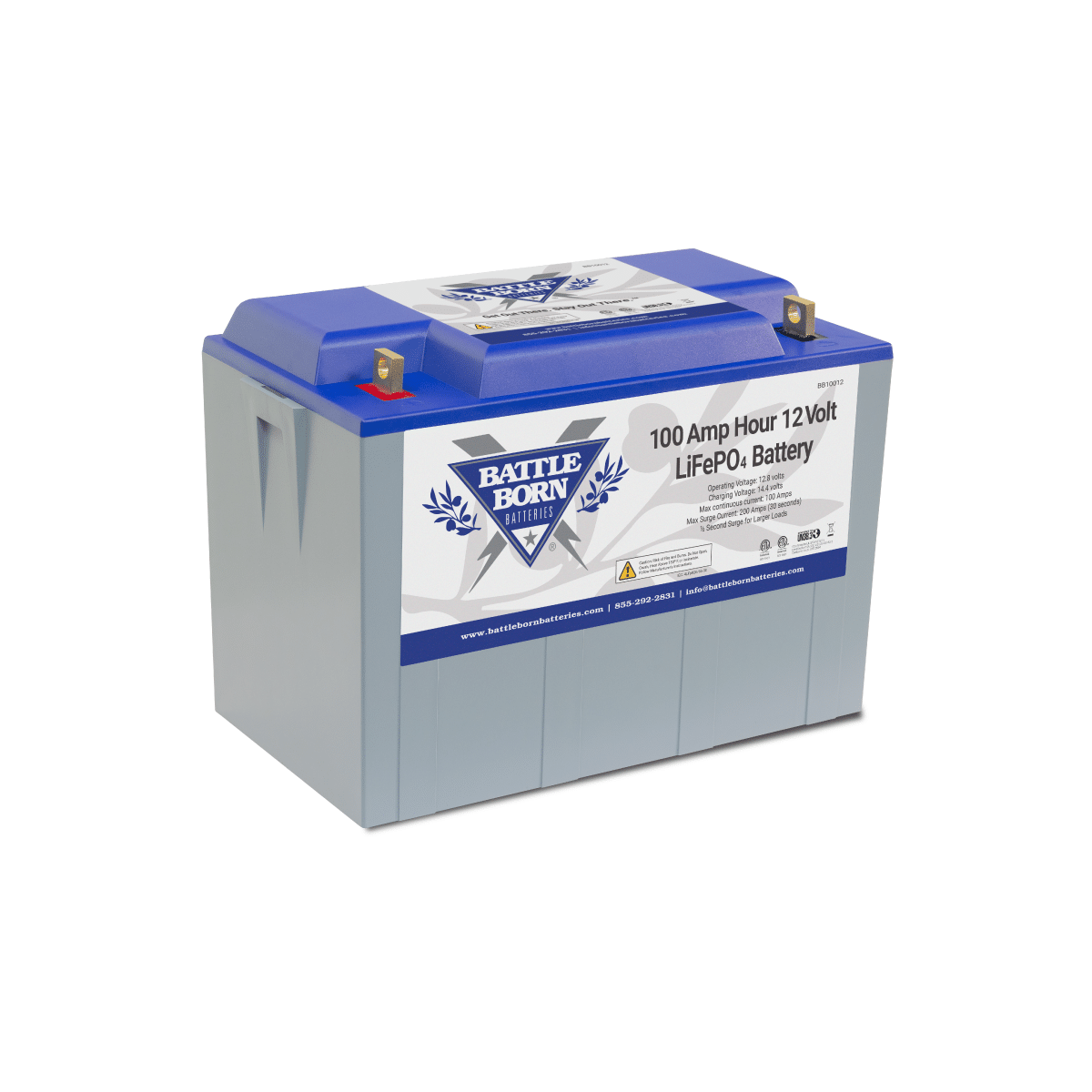
Battle Born 100Ah LiFePO4 12V Lithium Battery
Why We Like It
- 3,000–5,000 charge cycles vs. 500–800 for AGM — drastically lower lifetime cost
- Built-in Battery Management System (BMS) protects against over-charge and deep discharge
- Drop-in replacement for Group 27/31 lead-acid or AGM batteries
- 80–90% usable capacity vs. 50% for AGM — 80–90Ah usable from 100Ah rated
- 10-year warranty — the best in the industry
- Significantly lighter than equivalent AGM
Battle Born makes the gold standard LiFePO4 battery for overlanding applications. The case for lithium over AGM is compelling when you run the numbers over a vehicle's lifetime: AGM batteries cycle 500–800 times before significant capacity degradation; LiFePO4 batteries cycle 3,000–5,000 times. At one full cycle per day (typical for a serious overlander doing 100+ nights per year), an AGM battery lasts 1.5–2 years; a Battle Born lasts 8–13 years. The $895 premium over a comparable AGM pays for itself in 3–4 replacement cycles.
The built-in BMS is critical. It prevents the battery from being over-discharged below 10V (which permanently damages lithium cells) and protects against overcharge, short circuits, and temperature extremes. The drop-in replacement form factor means you don't need to modify your battery tray or wiring — just swap batteries, confirm your charger and DC-DC charger are lithium-compatible, and you're done.
5. Renogy DCC50S — Best DC-DC Charger for Dual Battery Systems
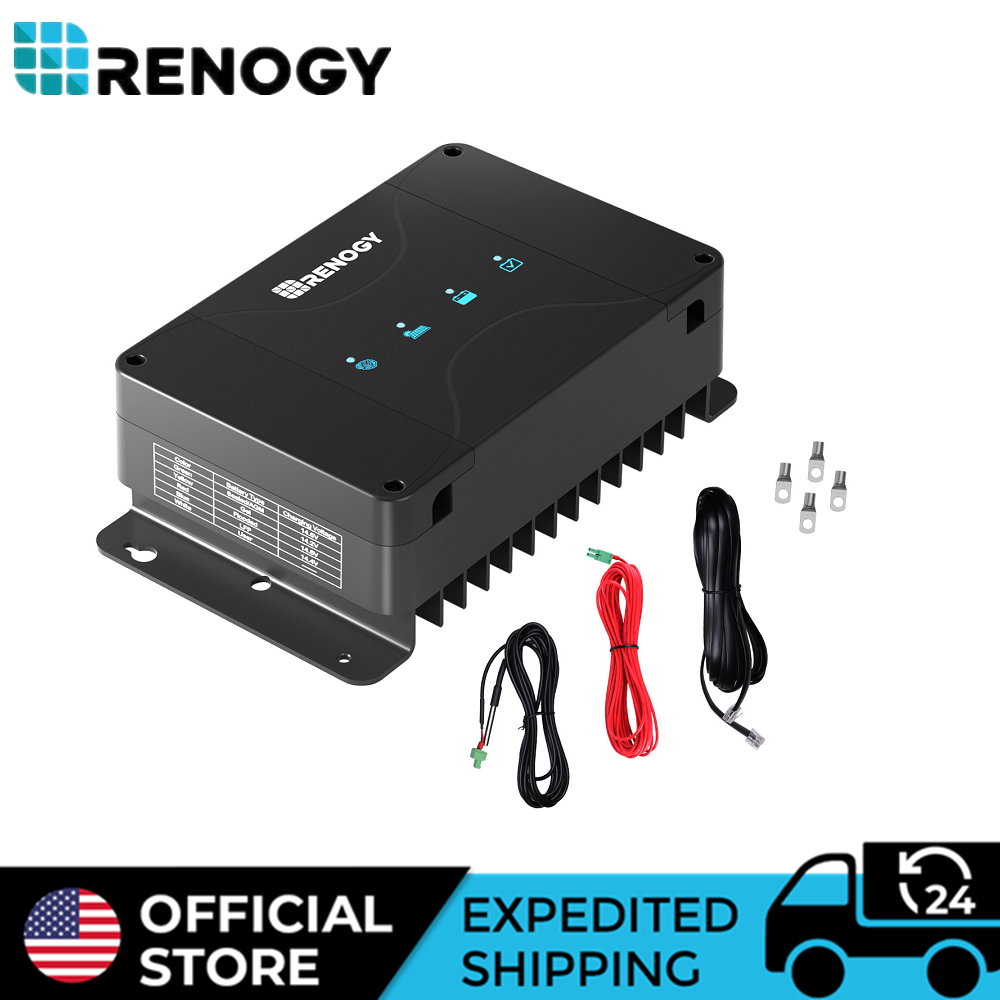
Renogy DCC50S Dual Battery DC-DC Charger
Why We Like It
- 50A output — charges a 100Ah lithium battery from 50% in approximately 1 hour of driving
- Compatible with lithium (LiFePO4) and AGM battery chemistries
- Intelligent alternator protection — won't overload your alternator
- Built-in MPPT solar input (up to 50A additional) — one unit handles both charging sources
- Compact size fits in tight under-hood or cab-corner installations
- Renogy's warranty and support is solid for the price
A DC-DC charger (also called a battery-to-battery charger) is the correct way to charge a lithium auxiliary battery from your alternator. Modern smart alternators in newer vehicles vary their output voltage in ways that confuse simple isolator relays — a DC-DC charger handles this correctly and delivers a proper multi-stage charge profile to the auxiliary battery regardless of alternator behavior. At 50A, the DCC50S can charge a depleted 100Ah lithium battery to full in approximately 2 hours of driving — a full day trip with typical driving easily keeps the auxiliary battery topped up.
Portable Power Station vs. Permanent Dual Battery System
This is the most common question we get, and the honest answer is: it depends on your situation.
Choose a portable power station if:
- You don't want to modify your vehicle
- You drive multiple vehicles or haven't committed to a single overland rig
- You're just getting started and want to try the overlanding lifestyle before investing in permanent mods
- You want the unit to pull double duty as home backup power
- You're doing trips of 4 nights or fewer where recharge from solar covers your needs
Choose a permanent dual battery system if:
- You have a dedicated overland rig you're committed to building
- You're doing longer trips (5+ nights) where you want maximum capacity
- You want the power system to be invisible and always ready — no setup, no lifting heavy stations
- You're running high-draw loads (air compressor, inverter for cooking) that exceed portable station output limits
- You're mounting a roof-top solar panel and want a clean, permanent wiring solution
How to Calculate Your Power Needs
Add up the watt-hours consumed by each device over a 24-hour camp period:
- Compressor fridge (Dometic CFX3 35): ~2A x 12V x 24h x 40% duty cycle = ~230 Wh/day
- Rooftop tent fan: ~1.5A x 12V x 8h = ~144 Wh/night
- LED camp lighting: ~10W x 4h = ~40 Wh/night
- Phone charging (x2): ~20W x 2h = ~40 Wh/day
- CPAP (if applicable): ~30–50W x 8h = ~240–400 Wh/night
A typical overlander without a CPAP runs 450–550 Wh per day. With a CPAP, plan for 700–950 Wh per day. Size your battery bank to cover 1.5–2 days of consumption without recharge — that gives you a buffer for cloudy days and ensures you never drain the battery dangerously low.
Solar Charging Math
In the continental US, a properly positioned solar panel receives 4–6 "peak sun hours" per day depending on location and season. At 4 peak sun hours:
- 100W panel: ~400 Wh/day in good conditions
- 200W panel: ~800 Wh/day in good conditions
- 400W panel (two 200W suitcases): ~1,600 Wh/day in good conditions
A single 200W panel generates approximately 800 Wh on a good sunny day — enough to fully replace the consumption of a running compressor fridge plus basic devices. Add shade, clouds, or sub-optimal panel angle and that drops significantly. For serious off-grid use in variable conditions, 300–400W of solar capacity is the practical minimum for an overlander running a fridge and base camp electronics.
Lithium vs. AGM vs. Lead-Acid
Short version: buy lithium (LiFePO4) if you can afford it. Here's the detailed comparison:
- Flooded lead-acid: Cheapest upfront ($80–$150 for 100Ah). Heavy, maintenance-required, requires ventilation, 30–50% usable capacity, 300–500 cycles. Only makes sense as a cheap starter solution you plan to replace.
- AGM (Absorbed Glass Mat): No maintenance, sealed, tolerates some vibration. 50% usable capacity, 500–800 cycles. $150–$250 for 100Ah. A reasonable budget choice that lasts 2–3 years of regular use.
- LiFePO4 (Lithium Iron Phosphate): 80–90% usable capacity, 3,000–5,000 cycles, built-in BMS, significantly lighter. $800–$1,000 for 100Ah quality units. Highest upfront cost, lowest lifetime cost. The right choice for a permanent rig.
Power System FAQ
How long will a power station run my overlanding fridge?
It depends on ambient temperature, how often the lid is opened, and how full the fridge is. As a rule of thumb: a Dometic CFX3 35 at 77°F ambient draws about 230 Wh per day. A Goal Zero Yeti 1500X (1,516 Wh usable) would run that fridge for approximately 6.5 days with nothing else drawing power, or about 2 days in a typical camp scenario with lights and device charging. A Jackery 1000 Pro (1,002 Wh) gives you roughly 4 days fridge-only or 1.5 days of full camp use. At hotter temperatures, expect 20–40% shorter runtimes.
Is solar enough to power my setup while driving?
Not entirely on its own. Solar production while driving is inconsistent — panels on the roof or deployed at camp can produce 50–200W depending on sun angle and shading. That's sufficient to offset fridge consumption while parked in the sun, but it won't fully recharge a deeply depleted battery bank on its own. The most effective overlanding power strategy combines solar input (for stationary camp use and top-up while driving) with alternator charging via a DC-DC charger (for bulk recharging while driving). Together, they can maintain a 100–200Ah lithium bank indefinitely on trips with at least 2–3 hours of daily driving and adequate sun.
What's the difference between a power station and a dual battery system?
A portable power station is a self-contained unit — battery, inverter, charge controller, and display in one box — that requires no installation. You carry it in and out of the vehicle, charge it at home or via solar, and plug your gear into it. A dual battery system is a permanent installation: a second battery (typically under the hood or in the bed) wired to your vehicle's electrical system, isolated from the starter battery, charged by the alternator via a DC-DC charger and optionally by rooftop solar. Power stations are more flexible and require no vehicle modification; dual battery systems are always with you, charge automatically while you drive, and are more appropriate for high-capacity, long-expedition setups.
Reader Reviews
Share your experience with this gear